Strengthening community health systems for improved health service utilization at the local level in Nepal
What problem is being addressed?
A community health system is a network of local stakeholders and processes that develop, promote and deliver health care at the community level. In the decentralized and tiered health structure of Nepal it includes Female Community Health Volunteers (FCHVs), primary health care (delivered through health posts, primary health care centers, outreach clinics, and mobile camps), health mothers’ groups (HMGs), health facility operation management committees (HFOMC) and community-based health programs including maternal and child health programs. These systems are vital in promoting equitable and sustainable health outcomes, especially in rural and underserved areas.
Kapilvastu district continues to face significant challenges in achieving equitable health outcomes, particularly in maternal health and nutrition. As part of ReBUILD’s participatory action research (PAR) at our first learning site in Kapilvastu municipality (2021-25), we conducted resilience capacity mapping in February and August 2022. Findings from the municipality revealed that socio-economic barriers, and inadequate access to quality health services, further exacerbated by deeply rooted gender norms and social inequities, persistently hindered the uptake of health services, particularly in maternal health and nutrition. As part of the co-creation process, a group model-building workshop conducted in September 2022 with different levels of stakeholders within the municipality identified the absence of a strong well-functioning community health system as one of the core challenges and so prioritized the need for evidence-informed community-based activities and strengthening the community health system in their local action plan. In addition, despite the opportunity for municipalities and wards to plan and budget for evidence-informed local health priorities, the previous annual work plan and budget (AWPB) lacked adequate focus on community-based activities, strengthening the community health system overall.
What did we do?
The team from HERD International continuously advocated and supported municipal and ward-level actors to plan and implement activities strengthening the community health system. The activities include:
HFOMC reformation and orientation
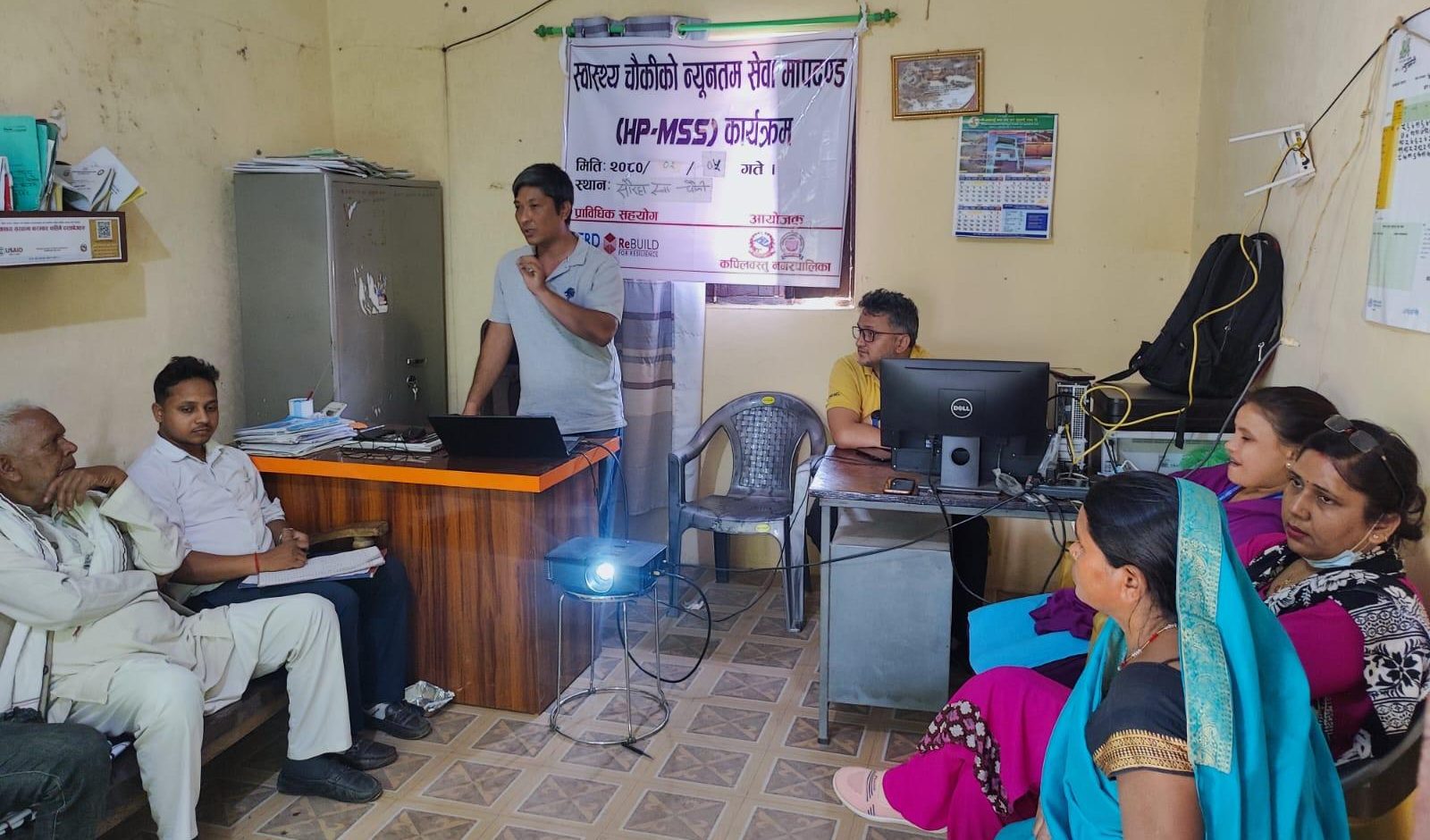
HFOMC is a defined community-based governance structure at local health facilities, overseeing local health facility operations and ensuring inclusive health service delivery. An assessment across health facilities during resilience mapping in 2022 revealed that HFOMCs existed in health posts but were absent in basic health service centres (BHSCs), which are the health facilities newly established by the Government of Nepal, and those that existed were not operating according to the official guidelines. HFOMC meetings were irregular, and most of the members lacked clarity on their roles. Strengthening HFOMCs was one of the key interventions of the PAR in the learning site and was included in the action plans. In response, HFOMCs were established in BHSCs, revitalized where needed, and members of all HFOMCs received two-days’ orientation on their roles and responsibilities during the initial months of the implementation period (from January to June 2023). These strengthened HFOMCs who now meet regularly in most of the health facilities where they discuss and identify the local health needs, bridge the gap between communities with health facilities, improve the quality of services provided by the health facilities, and present their plans to ward authorities for further support and action.
Inclusion of community-based activities in ward-level action plans
Through continuous advocacy and sensitization, not only the municipality but also the ward began incorporating community-level activities into their annual work plans. The importance of community level activities was also reflected during the critical reflection meeting with stakeholders at the end of PAR cycle 1 (January 2023-March 2024). As a result, for example, in fiscal year 2024/25 six wards allocated budgets for community dialogue sessions, focused on raising awareness on maternal health including nutrition and family planning and antimicrobial resistance. FCHVs and local facilitators deliver these sessions using a co-created flipchart, tailored to the community context and need. These sessions are ongoing within the community and are being monitored and supervised by health facilities. In addition, eight wards also allocated funds for providing long-lasting insecticide-treated nets (LLINs) to women seeking maternal services.
Implementation of pregnancy tracking
Following the commitment made during the multi-tier coordination forum meeting in November 2023 to strengthen maternal health services, the municipality incorporated a mobile health (mhealth) pregnancy tracking program in its annual work plan and budget for the fiscal year 2024/25. Through this platform, FCHVs and/or health workers register all pregnant women, track their progress, and follow-up closely for eight antenatal care (ANC) visits, institutional delivery, and four postnatal care (PNC) visits. The ReBUILD research team has been engaged in providing strategic guidance for program planning and implementation, along with capacity-building support for the municipality health team, health workers and FCHVs.
Capacity development of FCHVs
FCHVs are the pillars of the community health system and bridge the gap between community and health service. However, many had not received basic or refresher training since recruitment, which hindered their ability to effectively communicate key health messages in the community. Recognizing this gap, the municipality conducted an orientation in March 2025, to enhance FCHVs’ understanding of their roles and improve their capacity to provide information and guide communities in accessing essential health services, particularly maternal and child health services.
Revitalisation of Health Mothers’ Groups (HMGs)
The Government of Nepal initiated HMGs to be facilitated by FCHVs with the aim of bringing community women, particularly vulnerable and marginalized women of reproductive age, together monthly to discuss and learn about health problems and develop plans to address them. However, these groups were partially active for a long time, operating with limited effectiveness due to a lack of funds and support. Recognizing their value in empowering women and promoting health education at the community level, efforts were made to revive the HMGs. The municipality took responsibility to coordinate with FCHVs and wards to reactivate the HMGs. In the fiscal year 2024/25 five wards allocated budgets to support monthly HMG meetings, resulting in more regular HMG meetings in these areas. In addition, the orientation sessions provided to FCHVs further encouraged them to conduct HMG meetings. However, in wards without budget allocation, HMG meetings take place sporadically.
Impact
Local action plans in Kapilvastu municipality and wards were informed by community-generated evidence, leading to the inclusion of targeted community-based activities. This has supported strengthening the community health system and extended essential services to communities for improved health outcomes, particularly for the unreached. The inclusion and implementation of these interventions reflect local ownership, and the cost-effective and targeted nature has further motivated municipalities and wards to continue their initiatives and develop interventions to address other health issues with similar approaches.
Community health governance has been revitalized, as HFOMCs are now more active and have been identifying and presenting local health issues and priorities to the authorities, ensuring community voices inform local decisions. The institutionalized digital pregnancy tracking platform has strengthened and supported FCHVs in tracking and supporting pregnant women to improve maternal health outcomes, reflecting a commitment to equitable health service delivery. Since the launch of the pregnancy tracking program, there has been an increase in women completing eight ANCs from 34% to 43%.
In parallel, ward-level planning now includes community-based initiatives, promoting community health. Also, the capacity development of FCHVs and the revival of HMGs have strengthened and reactivated a critical link between the health system and the communities, ultimately improving health service utilization. These shifts demonstrate systematic improvement in community health delivery, with more responsive, inclusive, and sustainable approaches.
Further information
- Blog post: Health Facility Operation and Management Committees and their significance in local health governance in Nepal
- There are other ReBUILD for Resilience case studies here
Image: Health Facility Operation and Management Committee in Kapilvastu Muncipality