Strengthening health workforce resilience across fragile and shock-prone settings
The resilience of a health system depends primarily on the health workforce. This is especially the case in fragile and shock-prone settings, where distinct challenges are faced that are often more acute than in stable environments. A recent review of 36 studies in conflict-affected settings shows how conflict intensifies workforce pressures, disrupting service delivery, training systems, governance, and staff
wellbeing, while adding risks such as violence and displacement.
Our ReBUILD for Resilience research spans multiple countries and regions and provides grounded evidence-based insights from a wide
range of health staff, from community health workers to local managers and policy makers, working across public, private, and informal
sectors, including in contested, transitional, or non-state spaces.
In today’s era of polycrises and permacrisis – with overlapping, persistent shocks driven by the climate crisis, protracted wars, epidemics and other stressors – understanding workforce roles and how they are managed and supported is critical to resilience and long-term strengthening of the health system.
This brief sets out context-specific actions for policy and practice. We highlight the need for strong management capabilities and coordinated, plural provision of health services, public, private, faith-based and humanitarian, to refugees and other marginalised populations. The brief concludes with concrete steps to strengthen resilience.
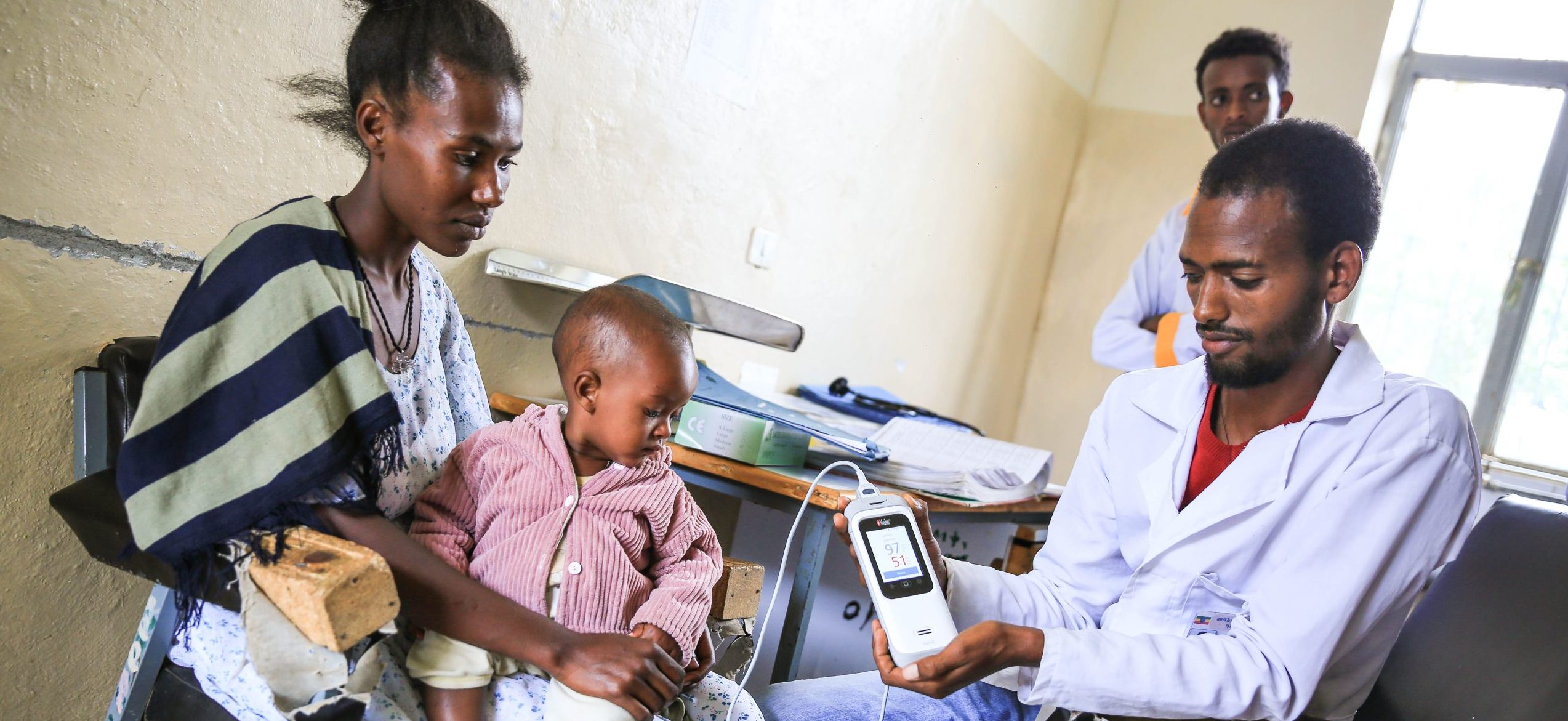
Image: Nurse checks 16 months old Daniel Hagos, using respiratory monitor as his mother Girmanesh Hagos, 20, watches. UNICEF Ethiopia via Flickr. [opens new tab] CC BY-NC-ND 2.0 DEED