Bringing theory and practice: Developing a local health governance guidelines from action research conducted in Lebanon
Background
Lebanon’s health system operates within a fragmented and highly privatised landscape, further strained by successive crises since 2019 that have weakened central governance and exacerbated inequities in access to care [1, 2, 3]. In such contexts, there is increasing recognition that local governance structures can play a critical role in organising health services, particularly where central institutions are unable to effectively regulate and coordinate actors and maintain a standard quality of care [4, 5, 6].
Within the ReBUILD for Resilience programme, the team from American University of Beirut (AUB) established a learning site in Majdal Anjar, Beqaa, to explore how local health systems could be strengthened under conditions of fragility. A participatory action research (PAR) approach was adopted. Through participatory workshops and continuous engagement with local stakeholders, the lack of coordination and planning at the municipal level was identified as a key leverage point. In response, a Municipal Health Committee (MHC) was established as a local governance platform to coordinate actors, support evidence-informed decision-making, and improve equitable access to services.
Over four years, the MHC was implemented and operated through iterative cycles of action, reflection, and adaptation, revealing governance as a relational and negotiated practice rather than a fixed structure. Building on this experience, the research team engaged in dissemination and upscaling efforts with other municipalities, presenting the MHC model, its principles, and its function as a governance mechanism meant to address some of the gaps within the national health system.
The idea of developing a practical guide did not originate from the research team but was explicitly raised by a mayor of one of the municipalities who attended one of the upscaling meetings. In that meeting, he requested a well-explained document that could assist municipalities in setting up and running their own local health governance structures. This request shaped both the purpose and direction of the guide, grounding it in the realities encountered through engagement with local actors.
What problem is being addressed?
While good governance practices are widely recognised as essential to achieving effective, efficient, transparent, and inclusive health systems, field experience has revealed that these normative principles do not translate easily into practice within localised institutions. In contexts marked by financial constraints, lack of institutional transparency in public roles, personal interests overshadowing the common good, and complicated local power dynamics, governance is not enacted as prescribed in theoretical frameworks. Instead it takes negotiated and context-dependent forms.
The development of the guide, therefore, aimed to both uphold the principles of good governance and explicitly acknowledge the realities within which local actors operate. It was designed not only to guide action, but also to make visible the conditions that shape what is feasible in practice.
At the local level, municipalities are officially mandated to organise services for their populations. However, in practice, they operate within environments where:
- Governance practice is marked by entrenched norms of clientelism, weak accountability, and the diversion of public mandates toward particular interests.
- Authority is negotiated rather than clearly defined, shaped by relationships and local power dynamics rather than formal mandates.
- Decision-making is often driven by immediate pressures and temporary interest rather than strategic priorities, and under resource constraints tends to become ad hoc, with limited consideration of medium- and long-term effects.
- Gaps in technical knowledge and the presence of competing interests hinder meaningful and sustained action.
- Coordination across actors emerges through informal arrangements, enabling responsiveness but remaining unstable and difficult to sustain over time.
- Crises continuously reshape needs and possibilities, requiring constant adaptation that is rarely anticipated in formal planning.
A key informant from the administration of Al Nosra Hospital, affiliated to the Palestinian Red Crescent, stated:
“To succeed in any governance initiative, we need to get rid of the mentality of patronage and clientelism and stop the practice of corruption and fund diversion. The current conditions ruin all the technical efforts, at the central and local levels.”
This gap between good governance models and the actual governance practices created the need for guidance grounded in real experience. Without explicitly acknowledging the constraints, power dynamics, and institutional cultures that shape local action, efforts to promote good governance risk remaining normative and aspirational, rather than practical and applicable.
What did we do?
Generating evidence
The guidelines were developed based on embedded participatory action research conducted in Majdal Anjar, where a MHC was established and operated. This process brought together researchers, municipal representatives, health providers, and community members, and generated multiple sources of evidence grounded in real-time practice.
Four main sources of data informed the development of the guidelines:
- Formal qualitative data gathered during the PAR process: Nine key informant interviews were conducted with local health stakeholders knowledgeable about the functioning of the MHC, alongside six critical reflection meetings with MHC members. These explored perceptions of governance processes, operational challenges, and emerging practices.
- Process documentation: Internal MHC documents and reports, including meeting records and operational outputs, were reviewed to trace the evolution of governance processes over time.
- Field observations: Researchers documented observations of interactions, decision-making dynamics, and operational practices during MHC activities in a field journal, capturing the relational and contextual dimensions of governance.
- Mini-interviews for guide development: Short interviews were conducted with municipal leaders in the Beqaa region to assess expectations, needs, and preferred content for the guideline, ensuring its relevance beyond the initial learning site.
All qualitative data were analysed using a thematic approach to identify key features of governance practices, stakeholder perceptions, and operational constraints, as well as the conditions that enable or limit implementation.
In parallel, the drafting process itself was iterative and participatory. Draft sections of the guidelines were reviewed by non-specialist readers to assess clarity, readability, and practical usefulness. The final guide was produced in both English and Arabic to ensure accessibility for local stakeholders. Rather than producing evidence separately from action, learning emerged through continuous cycles of implementation, reflection, and adaptation, allowing the guidelines to be directly grounded in lived governance experience.
Development of the guidelines
The guidelines were developed by translating this lived experience into a structured yet flexible document. This required moving from an evolving, relational practice to a written form that could support other municipalities in initiating similar processes. This translation process revealed important tensions:
- How to formalise practices without oversimplifying them
- How to capture implicit power dynamics without discouraging users
- How to guide without prescribing rigid models
- How to retain flexibility within a structured document
Addressing these tensions required iterative drafting, discussion, and revision, drawing continuously on both empirical material and feedback from practitioners.
The resulting guideline reflects a balance between structure and adaptability. It proposes key principles derived from practice, including:
- Evidence-informed decision-making
- Community engagement
- Iterative planning and feedback
- Context-sensitive implementation
To enhance its practical usefulness, the guidelines incorporate concrete examples drawn from the MHC experience and provide templates of key operational documents, including terms of reference (ToR), membership forms, population-level surveys, and strategic planning tools.
The guidelines were produced in both hard and soft copies, in both languages, and made publicly accessible through the AUB website. Readers and practitioners were encouraged to provide feedback, which will inform subsequent revisions and future editions of the guide.
Importantly, the guidelines do not present a fixed model, but rather a framework that can be adapted to local conditions, acknowledging that governance practices must be negotiated and reshaped in context.
Testing and refining the guideline
To ensure relevance and usability, the guideline was presented to multiple municipalities. These exchanges allowed testing of both its content and its wording through direct interaction with potential users.
Municipal actors provided feedback on:
- Clarity of language
- Feasibility of proposed actions
- Alignment with their institutional realities
This process led to iterative adjustments in wording and framing, making the guide more accessible and grounded in municipal practice. Several municipalities expressed interest in using the guideline to initiate MHCs.
Challenges
Several challenges emerged during the development of the guidelines.
First, translating a dynamic, evolving practice into a structured document proved difficult. Much of the governance process relied on tacit knowledge, relationships, and negotiation, which are not easily captured in written form.
The experience informing the guidelines was based on a single embedded case. While rich in depth, this raised questions about generalisability and the extent to which the guidelines could be applicable across diverse contexts.
Balancing clarity and scientific rigour was a constant tension. Overly prescriptive guidance risked becoming unrealistic, while excessive rigour risked limiting practical usefulness.
The broader context of crisis and instability in Lebanon meant that governance practices were continuously shaped by external shocks, complicating the formulation of stable and transferable guidance.
Finally, addressing sensitive aspects of governance, such as power relations, clientelism, transparency, and evidence-based practice, required careful framing. Making these dynamics visible was essential for realism, but doing so without discouraging users or creating resistance remained a persistent challenge.
Results
The process resulted in practical guidelines grounded in real-life governance experience. The guidelines capture key processes, principles, and lessons learned from establishing and operating a MHC in a fragile setting.
Beyond the production of the document itself, the process demonstrated that:
- Governance emerges through relationships, trust, and negotiation rather than predefined structures
- Effective action depends on adapting to constraints rather than overcoming them
- Evidence becomes meaningful when it is used collectively to inform decisions
The engagement with municipalities confirmed the relevance of the guide, as local actors recognised their own challenges in its content and expressed interest in applying it.
Impact
Rather than representing a finalized model, the guidelines contribute to bridging the gap between theory and practice in local health governance. It highlights that governance cannot be fully designed in advance, but must be learned, negotiated, and continuously adapted through practice. In this sense, the guidelines function not as a prescriptive tool, but as a structured reflection of lived experience that can support other municipalities in navigating similar processes.
More broadly, the development of the guidelines point to a critical insight: in complex and fragile settings, the field does not simply apply theory, but it rather reshapes and produces it. By making this experiential knowledge explicit, the guide offers a way to translate practice into guidance without detaching it from the conditions that produced it, while remaining open to further adaptation.
Further information
Study: Understanding and developing a resilient health system in Majdal Anjar, Lebanon: a learning site project
There are other ReBUILD for Resilience case studies here
References
All links open new tabs.
[1] United Nations High Commissioner for Refugees. (2021). Syrian refugees in Lebanon.
[2] World Bank. (2021). Lebanon economic monitor: The great denial.
[3] Sharmila Devi, Lebanon faces humanitarian emergency after blast, The Lancet, Volume 396, Issue 10249, 2020, https://doi.org/10.1016/S0140-6736(20)31750-5.
[4] Yamout, R., Khalil, J., Raven, J., Fouad, F. M., & Mansour, W. (2025). Navigating turbulence: Analyzing the resilience of Lebanon’s healthcare system in a multi-crisis scenario. Health Research Policy and Systems, 23(1), 120. https://doi.org/10.1186/s12961-025-01382-0
[5] Gilson L, Lehmann U, Schneider H. Practicing governance towards equity in health systems: LMIC perspectives and experience. Int J Equity Health. 2017 Sep 15;16(1):171. doi: 10.1186/s12939-017-0665-0.
[6] Bigdeli, M., Schmets, G., & Soucat, A. (2017). Investing in health system governance: Collective action required. International Health Policies.
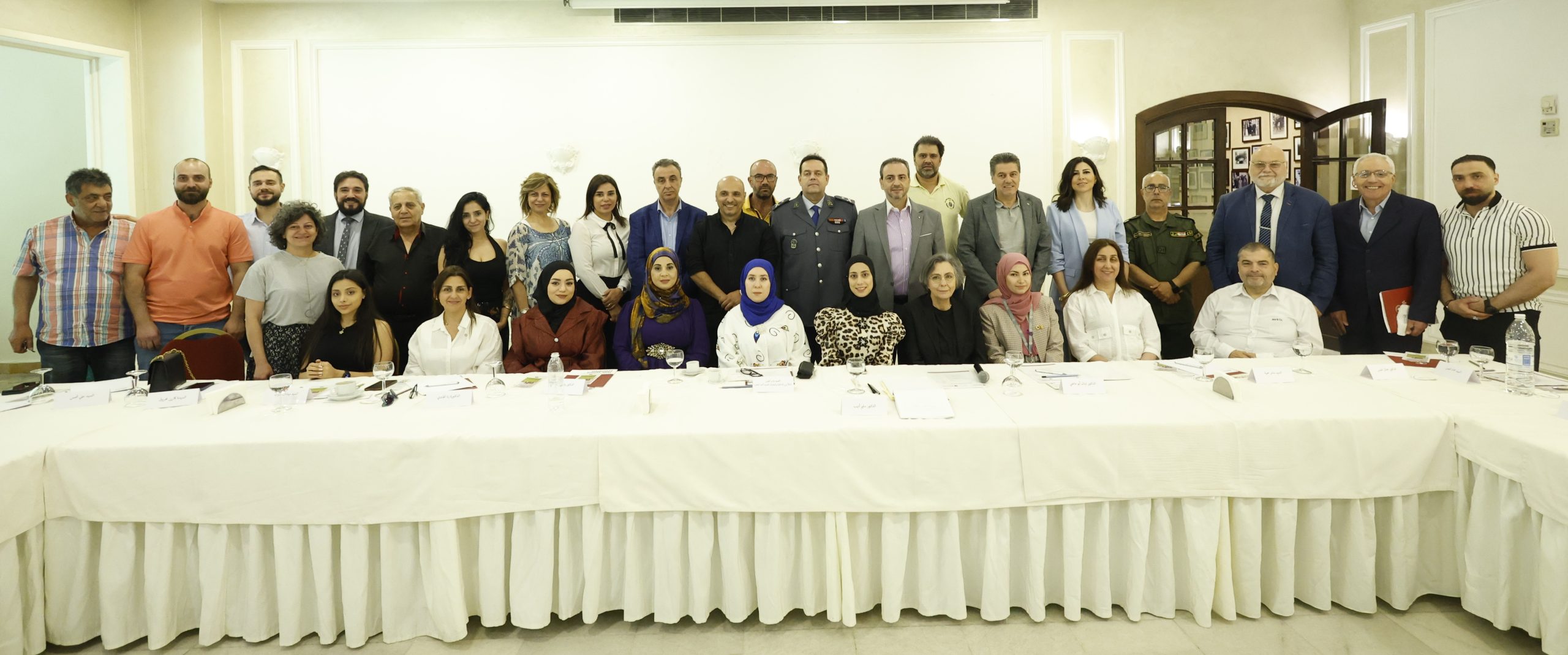
Image: A Majdal Anjar Municipal Health Committee stakeholder meeting