Strengthening local health system resilience: Evidence and lessons from five years of embedded learning site research in the municipalities of Nepal
Nepal’s 2015 constitution transformed a unitary state into a three-tier federal system, devolving substantial authority for health planning, financing, and service delivery to seven provinces and 753 local governments. Federalization has created opportunities for tailored local health policies and plans, improved municipal level governance, and need-based budget allocation, but also exposed gaps in coordination, capacity, and accountability across tiers. The initial assessment in the learning sites in the Kapilvastu district of Nepal revealed several systemic challenges in local health governance, planning and decision-making and service delivery.
The primary objective of this policy brief is to provide national, regional and global stakeholders with evidence-based, actionable strategies for building health system resilience in a decentralized, low-and-middle income country context. Rather than proposing large-scale investments, the brief summarizes how low-cost, pragmatic changes in routine functions related to governance, evidence-based decisions and inclusive participation can bridge existing systemic gaps.
Further information
This brief is based on findings from HERD International’s embedded learning site work in Kapilvastu district in Nepal. There were two learning sites, with more on each of these here:
- Strengthen coordination mechanisms and improve health system resilience across local governments in Kapilvastu district, Nepal – more here
- Understanding and strengthening local health governance and planning to build resilient local health systems that leave no one behind: Nepal – details here
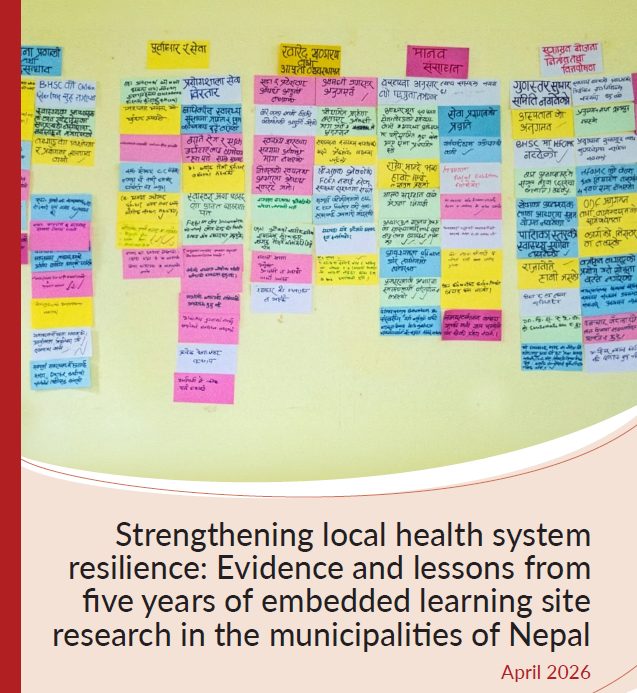
Image: Health system-related issues identified by local stakeholders during a group model building workshop