Resilient local governance in action: How participatory research enabled the Municipal Health Committee’s emergency war response in Lebanon
Background
From 7th October 2023, tensions escalated between Hezbollah and Israel along Lebanon’s southern border, culminating in a broader war that directly affected Lebanon in late September 2024. By the end of December 2024, the Israeli offensive had caused 4,047 deaths and 16,638 injuries, and displaced approximately 1.5 million people. Some 200,000 of them — 44,000 families — were reported as needing refuge and were distributed to more than 1,000 shelters in schools and collective premises across safer areas such as the Beqaa valley, Mount Lebanon and Beirut. The others rented premises in safer areas, while a minority left the country to become refugees.
As part of the participatory action research (PAR) process under the ReBUILD for Resilience learning site, the Majdal Anjar Municipal Health Committee (MHC) was established in 2022 and strengthened through collaborative PAR efforts, supported by mentorship from ReBUILD’s team at American University of Beirut (AUB).
The AUB team has been actively guiding and observing the development of the MHC under the patronage of the Municipal Board with a view to ensuring the committee’s effective functioning. As the border crisis broke, and in anticipation of a refugee influx, the MHC decided to take proactive steps to develop an evidence-informed emergency response plan in early 2024. This began with a capacity strengthening workshop involving not only its members but also representatives from the Red Cross, Civil Defence, school principals, local NGOs, and community leaders. This initiative exemplifies the MHC’s commitment to implementing local governance for health that is equitable, inclusive, cost-effective, and well-coordinated among local stakeholders, as well as available humanitarian support and expertise. This aligns with the ReBUILD health system resilience framework’s emphasis on inclusive governance and informed leadership.
What problem is being addressed?
With Lebanon’s national systems overstretched and deficient, international actors became first responders. Consequently, the MHC emerged as a key actor in supporting displaced populations, and took the opportunity to act upon its vision of a provider of equitable, evidence-informed, cost-effective and community-driven local healthcare governance. Its evolving role was enabled by a three-year history of cycles of co-learning, planning, implementation, and reflection, which generated context-specific knowledge on strengthening local system resilience. The crisis provided an opportunity to test and refine the MHC’s research-informed emergency preparedness plan, demonstrating the application of embedded research in practice.
What did we do?
The preparatory process was as follows:
MHC coordination with municipal authorities
As part of its action research process, the MHC reviewed early signals of displacement during its weekly meetings and deployed a response to the influx into the village of displaced families. Upon the arrival of the first families, and guided by insights from preparedness research and simulations, the MHC immediately activated its collaboratively-developed emergency plan. Members met with the Mayor to address urgent health and humanitarian needs, ensuring that all displaced and affected populations — whether in displacement centers or renting premises — were considered, reflecting their commitment to equitable access and an inclusive response. Humanitarian needs addressed included shelter, food, and health, based on the municipality’s shelter policy. Those who needed support were identified through a meticulous needs assessment survey and mapping of available NGO support and aid that could be solicited for both displaced and host populations affected by the crisis. The Mayor endorsed the MHC’s proposed plan and officially deployed six municipal police officers to assist with implementation of the emergency plan, translating the research findings into immediate municipal action.
Mapping displacement and associated needs
Faithful to its vision of evidence-based action, the MHC conducted a door-to-door survey with the assistance of ten MHC volunteers and six municipal police officers to census all displaced families in the village. This effort mapped 220 displaced families — comprising 1,488 people — residing in rented apartments. Subsequently, the municipality, following the advice of the MHC to address the needs of displaced populations within the village, authorized the opening of a displacement center in one of the schools. In line with ReBUILD’s emphasis on inclusive data systems, the MHC designed and distributed an electronic survey via WhatsApp and social media platforms to assess the health, psychosocial and socioeconomic needs of displaced individuals. The insights gathered from these surveys informed subsequent partnerships and targeted interventions.
MHC collaboration with non-state actors
Aligning with its strategic goal of promoting partnerships with local stakeholders, the MHC strengthened links between the municipality and regional NGOs by activating existing negotiated partnerships and creating new ones. Prior to activating its emergency response, the MHC organized multi-stakeholder workshops, reviewed and discussed their findings, and identified gaps in service referral pathways, thereby coordinating NGO efforts to meet the needs of displaced populations. This collaborative process led to the development of targeted strategies, such as a centralized referral mechanism, which improved coordination for shelter, healthcare, protection, and psychosocial support, transforming research insights into practical, coordinated action through enhanced data sharing and inter-organizational cooperation.
Mobilizing medical and psychological support: Formation of a crisis cell
Along with partners, the MHC catalyzed the formation of a municipal health crisis cell. It created a digital registration platform to connect displaced persons with volunteer doctors providing free or subsidized consultations. This innovative solution was informed by participatory planning and prior assessment on the accessibility of services in the village. The platform was disseminated to hospitals, clinics, and practitioners, integrating digital tools co-identified during earlier research phases.
Results
Thanks to its participatory research foundation and early preparedness, the MHC played a leading role in coordinating relief to who came to the village to take shelter. In collaboration with Médecins Sans Frontières (MSF), and through an active data exchange between MHC and MSF, mobile clinics were operated by MSF, treating 314 chronic patients and 574 acute incidents in one month. Another NGO responded to the need for winterization, and distributed 1,200 blankets and mattresses. ANERA (American Near East Refugee Aid) enabled 42 patients to access long-term care and referred 78 more, while distributing 400 hygiene kits, all under the coordination of MHC. Partnerships with World Vision and LOST (Lebanese Organization for Studies and Training) also provided food rations.
The crisis cell mobilized 47 doctors and seven psychologists to offer remote support—another intervention which aligned with ReBUILD research priorities on digital health and mental health in fragile settings. The MHC also produced psychosocial support materials — posters, videos, and WhatsApp content—to foster community resilience and emotional well-being, demonstrating adaptive knowledge translation.
Impact
The MHC’s journey exemplifies how embedded, participatory research can shape and guide real-time responses. Through a locally driven process of emergency planning, evidence generation, collaboration with local stakeholders and co-designed quick responses, the MHC operationalized core pillars of the ReBUILD for Resilience framework — equity, adaptive learning and evidence-based local response.
This case study provides tangible evidence that research uptake — through community-led preparedness planning, service mapping, and digital innovation — can drive meaningful impact. The MHC experience highlights the potential of research-informed local institutions to fill governance gaps, enhance health equity, and enable sustainable resilience in complex emergencies.
Further information
- More on the development of the learning site in Majdal Anjar
- There are other ReBUILD for Resilience case studies here
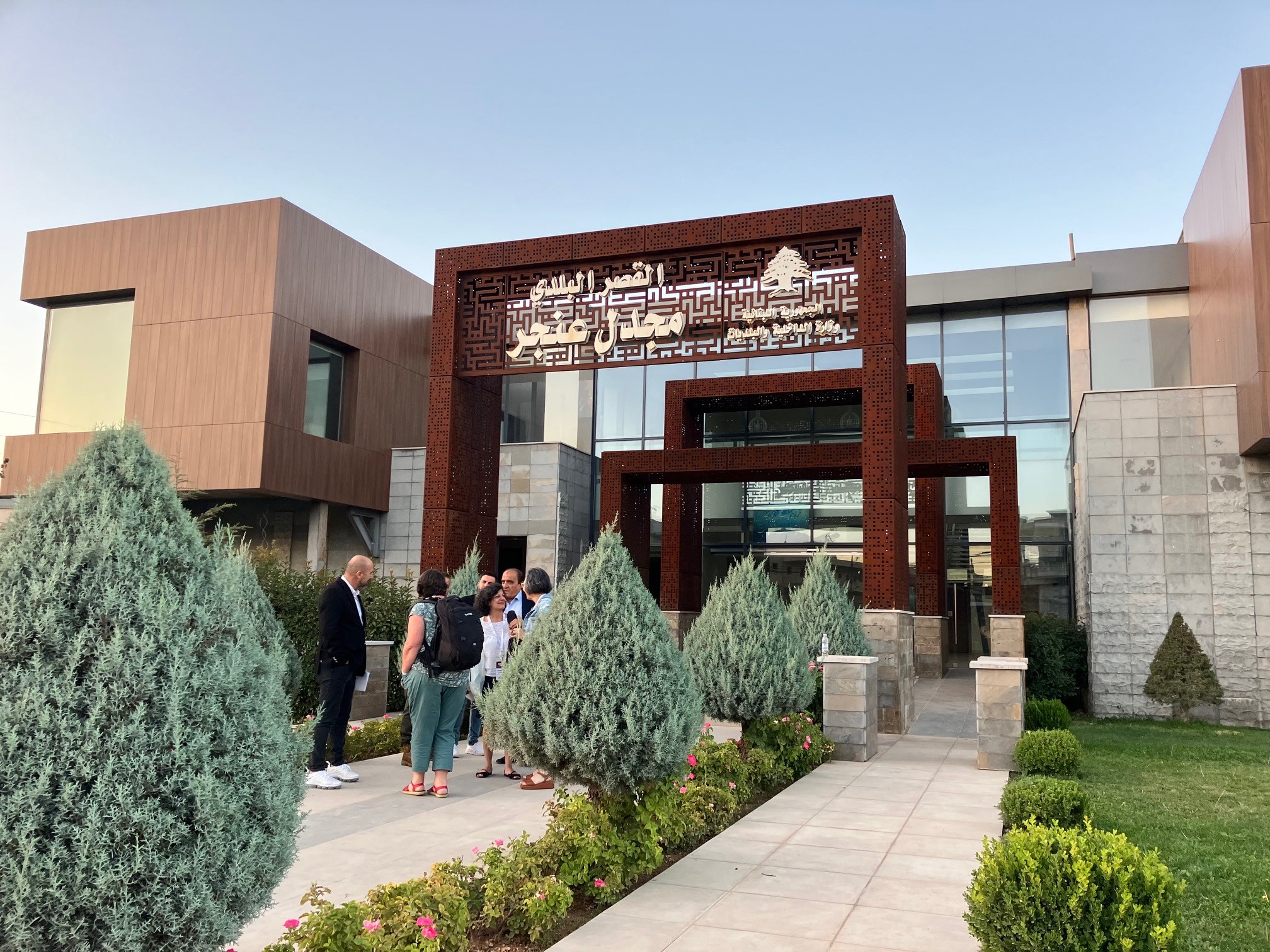
Image: The Majdal Anjar municipal building