Situation analysis: Health care services in selected communities in earthquake-affected areas of Mandalay and Sagaing, Myanmar
Read this emergency response brief here.
On 28 March 2025, Myanmar experienced two major earthquakes of magnitudes 7.7 and 6.4 which severely impacted central regions, particularly Mandalay and Sagaing. Extensive infrastructure damage, including more than 300 health facilities, overwhelmed the health system’s capacity to manage immediate trauma and heightened risks of disease outbreaks. Despite international humanitarian assistance, there are critical gaps in service access, rising burdens of communicable and non-communicable diseases (NCDs), and limited psychosocial support.
This brief from the ReBUILD team at Burnet Institute describes our study (more on that and its other outputs here) which aims to inform implementing partners on how they might tailor public health emergency responses to address urgent community health needs. Key recommendations include:
Strengthening health care services
• Create formal administrative bodies and implement systematic household registration in camps.
• Establish clear referral pathways for obstetric emergencies, including transport support and ensure continuity of anti-natal care and post-natal care services.
• Continue comprehensive sexual and reproductive health service provision, including gender-based violence services and care.
• Promote nutrition screening, referral, and community-based management of acute malnutrition.
• Enhance collaboration between the public and private sectors to improve immunisation coverage.
• Provide Psychological First Aid training to frontline health workers and deploy mobile teams.
• Sustain health education interventions and community volunteer training for resilience building.
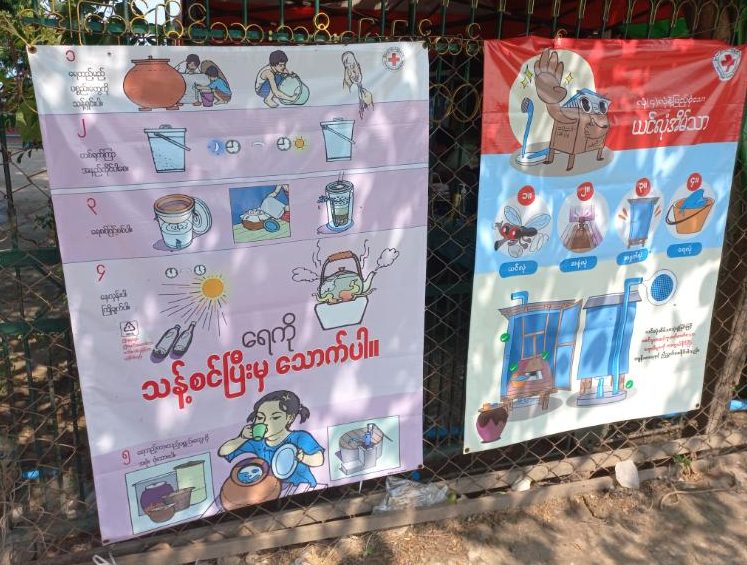
• Maintain water sanitation and hygiene activities with gender-sensitive latrine infrastructure, lighting, and proper sewage systems.
Improving organizational and medical team coordination
• Expand diagnostic capabilities with rapid tests and basic imaging.
• Establish systematic referral systems with documentation and transport support.
• Monitor and secure medicine supply chains, especially for non-communicable diseases, to prevent treatment interruptions.
• Implement patient record systems and promote inter-clinic coordination.
• Address staffing gaps through rotation, mental health support, and training.
• Maintain regular coordination meetings, information sharing and develop robust data-sharing protocols.
• Plan clear exit strategies, including service handovers to other organisations or the public sector.
• Ensure regular reporting to public health authorities to support early warning and response system and epidemiological surveillance.
Read this emergency response brief here.
Further information
There’s more on this study here.
Image: Instructions on how to safely use emergency water supplies (left), and fly-proof toilets (right) in a camp for people displaced by the earthquakes. Image courtesy Zenith Quality Team.