Research capacity strengthening in fragile settings: Case study from ReBUILD for Resilience
Even though progress has been made in strengthening health research capacity, a major gap remains in Health Policy and Systems Research (HPSR). This field is still relatively new and differs from traditional areas like epidemiology because it draws on multiple disciplines. As a result, many low- and middle-income countries still lack strong HPSR capacity.
This challenge is even greater in fragile and shock-prone settings, where weak systems, conflict, and limited resources make research difficult. In these environments, urgent needs often take priority, leaving little time or funding for strengthening research skills.
Yet, this is exactly where HPSR is most needed. Strong research can help improve health systems, build resilience, and support long-term development through better, evidence-based decisions. While we have some knowledge about strengthening health research in general, there is still very little focus on how to develop HPSR capacity specifically in these fragile settings.
What did we do?
Over the six years of the ReBUILD for Resilience consortium, we have carried out capacity strengthening approaches and activities to strengthen HPSR capacity among researchers and other health system actors at the individual, organisational, and community level. These approaches and activities have included:
Capacity needs and assets assessment
In September 2020, a baseline assessment was carried out to identify capacity needs and assets across the ReBUILD for Resilience consortium. This included a survey completed by researchers, communication staff, administrators, and managers which assessed both their personal and organizational abilities to conduct and communicate research, as well as the broader research environment. Additionally, focus group discussions were held with each partner organisation to explore survey findings, identify priority areas, and discuss ways to strengthen capacity.
Development of strategy
Based on assessment insights, we developed a capacity strengthening strategy to build the ability of individuals and organisations to design, deliver, and communicate credible, policy-relevant health systems research, especially in contexts facing shocks and stressors. Grounded in shared values and shaped by challenging realities, the strategy outlined key principles and adopted a comprehensive, multi-level approach.
At the individual level, it focused on building the skills and capacities needed to support health system resilience. At the organisational level, it reinforced the structures and systems needed for effective research. At the community level, it prioritized meaningful engagement, enabling local actors to help shape research agendas and co-produce solutions. This integrated multi-level approach supported sustainable, locally grounded improvements in resilience. Priorities were guided by identified needs, consortium-wide gaps, and alignment with core objectives, spanning four domains: core concepts, research, research uptake and communication, and management.
Implementing the strategy at the individual, organisational and community levels
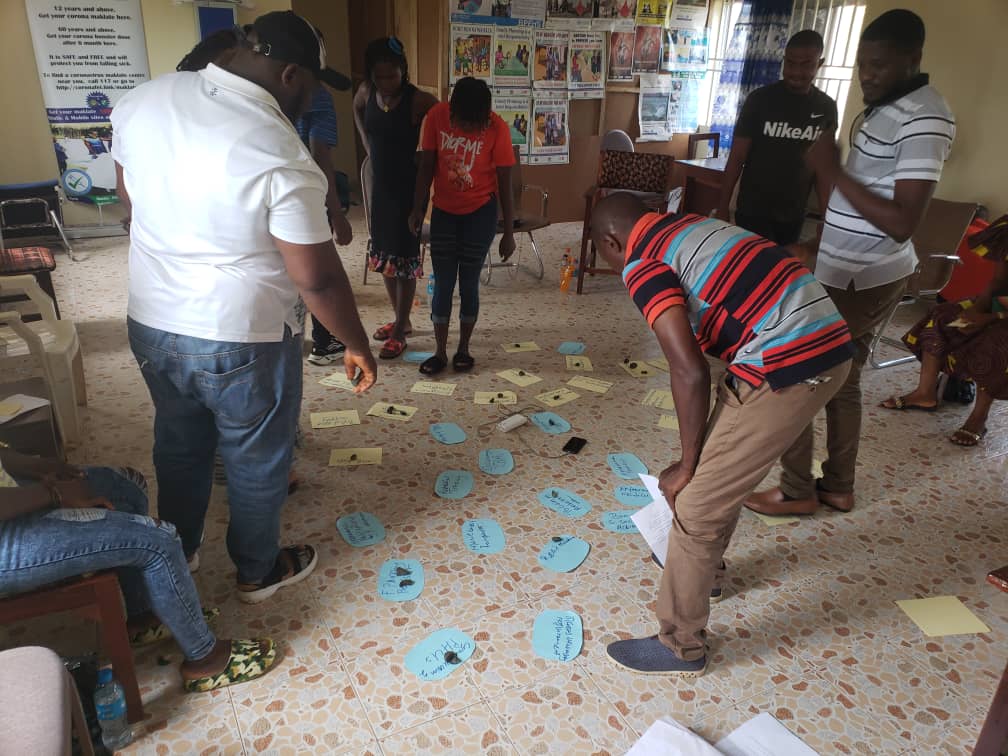
To operationalize this multi-level strategy, we implemented a set of interconnected activities tailored to the needs and evolving contexts of consortium members. We delivered monthly capacity-building sessions on research methods, communication, and project management. By mapping expertise across the consortium, we aligned needs with existing strengths and drew on internal member experts to deliver capacity-building sessions in their respective fields. This approach maximised efficiency and value for money while reinforcing equitable partnerships and shared responsibility across all partners.
Due to the consortium’s cross-country scope and disruptions from COVID-19, multiple shocks and ongoing conflicts, most training moved online, allowing the programme to continue while adapting to rapidly changing contexts. This flexible approach maintained momentum and demonstrated responsiveness to crises. Over time, capacity strengthening activities also expanded to focus more strongly on safeguarding and researchers’ mental health, with sessions addressing the emotional toll of working in fragile settings and promoting wellbeing.
To bridge theory and practice, sessions were redesigned to include hands-on applications, critical reflection, and iterative feedback, embedded in annual meetings, country visits, and dedicated reflection spaces. This approach strengthened the translation of knowledge into practice and ensured that learning was continuously applied and refined in real-world contexts.
We also created a dedicated capacity strengthening financial fund, supporting training, academic courses, international conferences, exchange visits, and writing retreats. Alongside this, members benefited from ongoing informal mentorship across research, publications, proposals, and financial management.
A key innovation was the Early Career Researcher Group, a peer network driving practical learning in proposal writing, publishing, and leadership. Members of the group co-developed and led a funded study on community health workers, gaining hands-on experience in research delivery, dissemination, and leadership. Acting as co-facilitators in training further strengthened their skills, demonstrating that building others’ capacity also builds your own.
To sustain learning, all capacity development materials were shared via a central platform ensuring continuous access and collaboration.
Gender, equity, and justice were embedded throughout. Through expert-led training, participatory research, and interactive workshops on intersectionality, disability inclusion, and justice, members strengthened both individual capabilities and their organisation’s collective ability to apply gender, equity and justice principles in practice.
What impact have we had?
Impact on individuals
During ReBUILD, strong engagement was sustained, with capacity strengthening consistently rated highly (4.2–4.5/5). In total, 39 training sessions were delivered on priority topics such as research methods, communication, and project management—reaching an average of 20 participants per session and extending beyond the consortium to strengthen partner organisations more broadly.
A key shift was the growing leadership of partners and early career researchers, who co-facilitated sessions, led research, and contributed to publications and conferences. Mentorship, hands-on learning, and participation in forums and international events further reinforced skills development.
Overall, ReBUILD strengthened the ability of individuals to generate and apply evidence for resilient health systems. Participants consistently highlighted the value of practical, tailored learning:
“We have done a lot on capacity strengthening through training sessions, sharing of materials and ideas, and webinars, adjusted to country needs” (Values Survey – 2021)
“The Capacity Strengthening Working Group is working really well to cover all training needs of partners and build individual capacities throughout the programme.” (Values Survey – 2023)
“Opportunities for learning by doing. We are learning as we go.” (Values Survey – 2023)
Impact on organisations
At the organisational level, changes in practice were evident, particularly in navigating complex, fragile settings where ethical research is both critical and challenging. Following the collapse of formal ethics review systems in Myanmar, the Burnet Institute introduced an innovative interim review model. By combining independent assessments from Myanmar-based researchers with oversight from an international body, this hybrid approach maintained ethical standards while prioritising local context and the safety of both participants and researchers. The model has since influenced institutional policy and drawn interest from other organisations working in similar contexts.
Gender, equity and justice also became embedded across partner institutions. At the Burnet Institute, this aligned with a broader institutional push on Gender Equity, Diversity, and Inclusion, reinforcing learning and practice across all levels of the organisation. These efforts went beyond individual projects, shaping organisational culture, informing staff training, and embedding principles such as safeguarding and justice into everyday practice.
Impact on communities
At the community level, we saw a clear shift in how research and evidence are understood and used. Policymakers and local stakeholders became more receptive to findings, increasingly integrating evidence into their decisions and day-to-day work. Confidence in engaging with data grew, alongside a stronger appreciation of its practical value, signalling the emergence of a more evidence-aware culture that will outlast the programme.
Capacity strengthening around gender, equity and justice also had a notable impact. In countries like Nepal and Lebanon, training with local partners and embedded researchers introduced new ways of thinking, often described as an “eye-opener”. Participants showed curiosity and openness, using these spaces to reflect and adapt gender, equity and justice approaches. As a result, these principles were increasingly embedded in local practice, shaping more inclusive engagement across communities and ensuring that diverse groups are better represented in health initiatives.
An evolving framework for capacity strengthening in fragile and shock-prone settings
Beyond identifying what worked, our analysis reshaped the existing research capacity strengthening framework (Mirzoev et al., 2022) to reflect lessons from ReBUILD. The updated model (Figure 1) keeps its multi-level focus (individual, organisational, and community) but places greater emphasis on values, adaptive management, and continuous learning. At its core is a cyclical process: assessment, strategy, implementation, and outcomes, designed to evolve through ongoing feedback. Surrounding this is a strong foundation of shared values, including equity, trust, transparency, inclusiveness, flexibility, and ethics, which guide everything from partnerships to resource allocation. The framework also highlights the role of management practices, such as shared leadership, cross-partner mentorship, and inclusive decision-making, as key drivers of capacity strengthening. Overall, this updated framework offers a flexible, values-driven approach to strengthening research capacity in fragile settings, grounded in experience and designed to adapt over time. This framework can support other research teams navigating the challenges of research capacity strengthening in fragile and shock-prone settings.
Figure 1: Revised Framework for Strengthening Health Policy and Systems Research Capacity in Fragile and Shock-Prone Settings
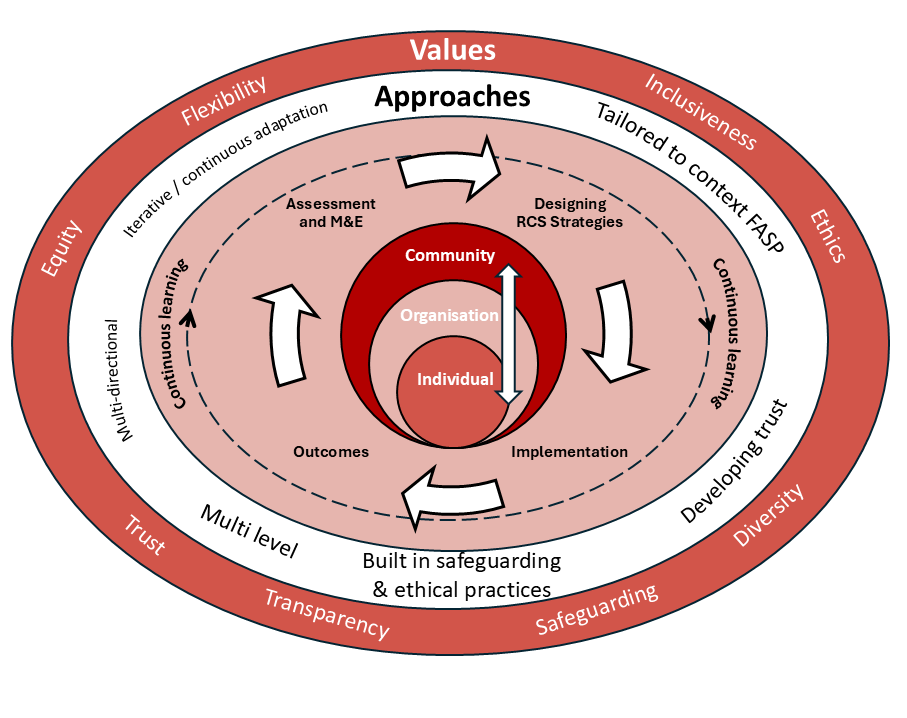
Revised framework for strengthening health policy and systems research capacity in fragile and shock-prone settings
To accompany this framework, we have developed a toolkit which offers practical guidance for designing, implementing and sustaining research capacity strengthening activities in fragile and shock-prone settings.
References
Mirzoev T, Topp SM, Afifi RA, et al. (2022). Conceptual framework for systemic capacity strengthening for health policy and systems research. BMJ Global Health, 7:e009764. https://doi.org/10.1136/bmjgh-2022-009764
Khalil J, Bertone MP, Gautam G, Mansour W, Idriss A, La T, Fouad F, Raven J. 2026. Research capacity strengthening in fragile and shock-prone settings: Insights from a research consortium. Social Science and Medicine – Health Systems 6, 100190. https://doi.org/10.1016/j.ssmhs.2026.100190
Khalil J, Raven J, ReBUILD Capacity Strengthening Working Group. 2026. Toolkit for research capacity strengthening in fragile and shock-prone settings. A practical guide based on the ReBUILD for Resilience experience
There are other ReBUILD for Resilience case studies here