From collective agency to advocacy: A participatory experience with women refugee informal health workers in Lebanon
What problem is being addressed?
In Lebanon, the healthcare system is under considerable strain in areas hosting large numbers of Syrian refugees. Peripheral regions in particular, face weak central oversight and a fragmented landscape of licensed and unlicensed healthcare providers. In response to rising service needs, many actors depend on Syrian refugee women working in healthcare roles, often in informal capacities, such as volunteering or employment within unauthorized facilities, where they deliver critical services to refugee and host populations.
However, these informally employed female health workers face multiple vulnerabilities, including low and unstable pay, absence of legal safeguards, gender-based discrimination, and demanding workloads that disrupt their work–life balance. They also often experience social isolation, stigma, and discrimination from the host community (more on that experience in this paper).
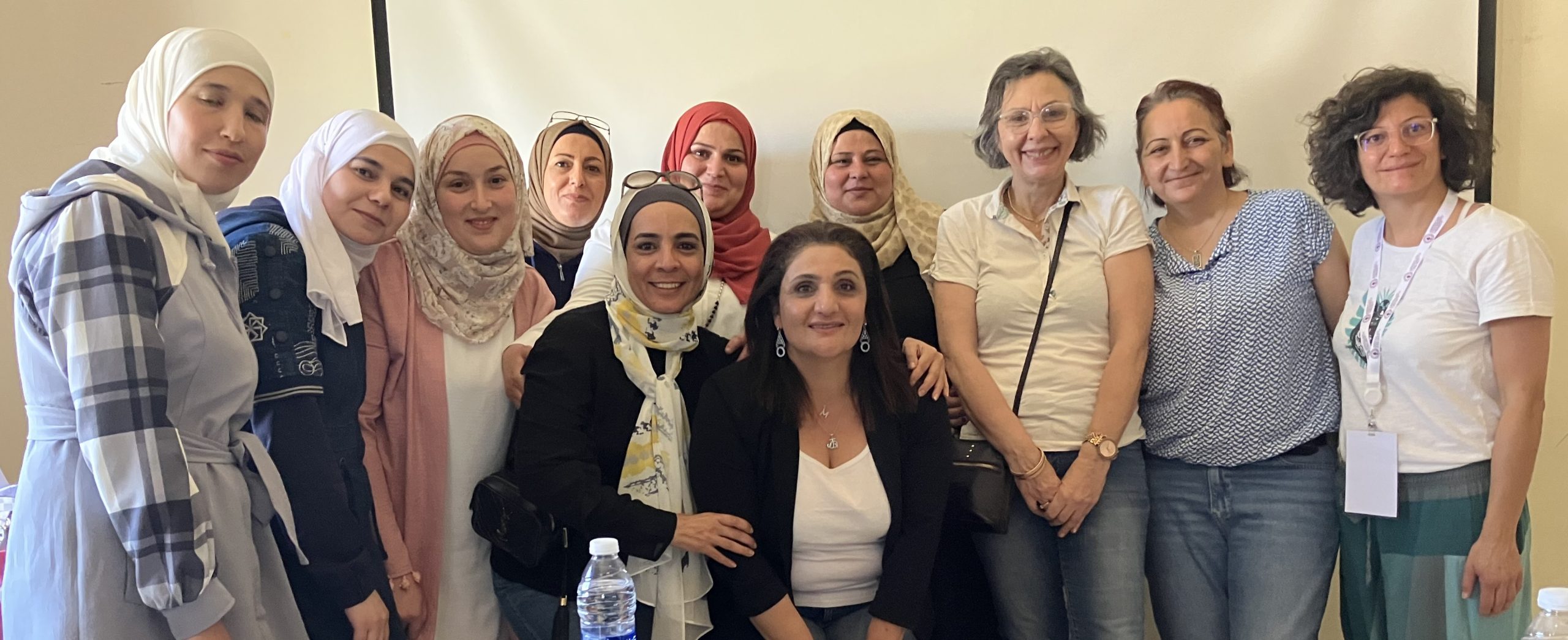
In a previous case study, Empowering women in healthcare: A community-led initiative for resilience and integration, we described the experience of a peer-led support group (Working Women) formed through participatory action research (PAR), initiated and operated by Syrian refugee women health workers, to improve their life and work conditions, and those of their peers.
Building on this experience, the present case study, also by the team at American University of Beirut, examines how this collective evolved to engage in advocacy-oriented activities to promote the rights of informal health workers, in collaboration with a local non-governmental organisation (NGO), Multi Aid Programs (MAPS).
What did we do?
Generating evidence
The support group members, with assistance from their NGO mentor and research team, conducted twelve key informant interviews with a range of stakeholders including directors of healthcare facilities, NGO representatives, community members, and a representative from the Ministry of Public Health. These interviews explored health stakeholders’ perceptions about working conditions, legal constraints, and social barriers affecting Syrian women working in the healthcare sector.
Findings highlighted the critical yet informal role played by refugee women in sustaining community health services, while also revealing structural constraints facing them, including limited legal protections, job insecurity, and limited professional opportunities.
Co-developing the advocacy plan
Through participatory workshops and meetings, members of the Working Women support group presented findings and discussed them with the research team to reflect on shared challenges and explore possible courses of action to implement their advocacy campaign. Rather than introducing a predefined advocacy model, these sessions focused on developing and articulating participants’ priorities and identifying ways of engaging with their environment.
Through this process, the group developed a multi-level advocacy plan with three complementary components:
- Engagement with the broader community: Through discussions with patients, colleagues, and families to raise awareness about the conditions of informal work and promote recognition and respect for women working in healthcare.
- Engagement with media: Using digital platforms, particularly social media, to amplify the voices and share experiences of refugee healthcare providers and raise awareness among broader audiences.
- Engagement with stakeholders: Direct engagement with health centre directors and community leaders to encourage institutional recognition and improved support for women healthcare providers.
These directions reflected participants’ own understanding of what forms of engagement were possible and acceptable within their social and institutional contexts and their own inclinations.
Implementing the advocacy activities
Implementation began with visits to health facilities in the Beqaa region to introduce the initiative and build relationships.
Advocacy activities were conducted in three dispensaries employing informal health workers and included:
- Community workshops with staff, patients, and families
- Discussions addressing social norms affecting women in healthcare
- Social media posts and a dedicated campaign on Instagram
- Meetings with health facility managers and stakeholders
Rather than following a fixed plan, these activities evolved through iterative adjustments, shaped by participants’ availability, contextual constraints, and emerging opportunities.
Challenges
Several challenges shaped the trajectory of the advocacy campaign undertaken.
Participants had limited prior experience with advocacy processes. Consequently, translating shared conceptualizations into structured actions required continuous facilitation and support by MAPS and the research team.
The activities unfolded more slowly than initially planned owing to logistical difficulties, the competing domestic responsibilities of participants, and the need to build participants’ skills in communication and advocacy.
Contextual disruptions affected the scope and the frequency of planned events. While the initial plan targeted five health facilities, activities were ultimately conducted in three dispensaries. In addition, broader political developments, including changes in Syria and Lebanese immigration regulations, led some participants to return home, altering group composition and continuity.
However, despite these challenges, the participatory process remained adaptive, allowing the team to adjust timelines and receive additional support to ensure the advocacy activities could continue. In a remarkable adaptation, participants modified the scope of their advocacy campaign, to include the participants who returned to Syria, adapting the messages to promote the integration of women health workers in their respective health systems.
Results
Despite delays, challenges, and shifts, the initiative achieved a series of activities that engaged multiple stakeholders, including healthcare providers, patients, families, and health facility managers, through a series of advocacy discussions, workshops and meetings.
Nine community-based workshops were conducted, addressing recognition of women healthcare providers, self-advocacy, and supportive social norms.
A media campaign extended the reach to a wider audience, through publishing a series of awareness posts that documented project activities and shared messages promoting recognition of refugee healthcare providers.
At the same time, the process of participation contributed to the development of practical advocacy capacities, including communication, presentation, stakeholder engagement, and collective organization.
Most importantly, the collective action to address the broader community reinforced what the women had gained from the previous two years of operation and engagement as a nascent support group, and gave them more confidence and determination to assert their rights and shake off marginalization. The experience of running an advocacy campaign, though modest, strengthened trust, solidarity, and shared purpose, reinforcing their collective agency.
Impact
Rather than producing immediate structural change, the initiative illustrates how advocacy can emerge as an extension of collective agency, built through engagement in social activism, in constrained settings.
Participation in advocacy activities contributed to a shift in how participants perceived their roles, moving from individual coping strategies toward collective engagement with their environment. This shift was expressed through increased confidence in interacting with stakeholders, greater visibility within communities, and the ability to articulate shared concerns.
The activities also contributed to raising awareness among healthcare staff and community members regarding the contributions of refugee women to local health systems.
More broadly, this experience suggests that advocacy, when grounded in participatory processes, among motivated and concerned individuals, may function less as a predefined intervention and more as a negotiated form of social action, shaped by context, relationships, and evolving collective capacities.
Further information
Study: Empowering refugee close-to-community healthcare providers through advocacy networks
There are other ReBUILD for Resilience case studies here
Image: The ladies of the Working Women group, staff from the Women Now centre and AUB and LSTM staff