Trust and inclusion in action: How local groups connect communities and health systems in Sierra Leone
Background
Building on earlier efforts by the ReBUILD for Resilience Consortium to explore how communities mobilize and take collective action in response to health challenges, this case study focuses on the establishment and evolution of local stakeholder groups in Sierra Leone. These groups were formed as part of ReBUILD’s broader initiative to strengthen health system resilience and enhance community engagement. By bringing together diverse actors from both the community and health system, the groups aim to address shared health challenges through inclusive dialogue and collaborative decision-making. The case study examines how trust, inclusivity, and relationship-building within these groups have shaped local ability to take action and sustain health initiatives. It also highlights the critical role these groups play in bridging the gap between formal health systems and community needs, an essential component of building resilient and responsive health systems in fragile settings such as Sierra Leone.
What problem is being addressed?
Despite the recognized potential of communities to contribute to health and drive progress, there remains a notable disconnect between formal health systems and local communities in Sierra Leone. Mechanisms such as facility-community committees, which are intended to serve as platforms for collaboration, often exist only in theory. In practice, many remain inactive or ineffective. In some committees, engagement is tokenistic, with committees failing to harness community insights to tackle challenges, evaluate evidence, and spur collective action. This disconnect limits the ability of communities to participate meaningfully in health governance and undermines efforts to build health systems that reflect the realities and needs of the populations they serve. As a result, there is a need to establish functional mechanisms that foster collaboration, trust, and mutual accountability between communities and health systems.
What did we do?
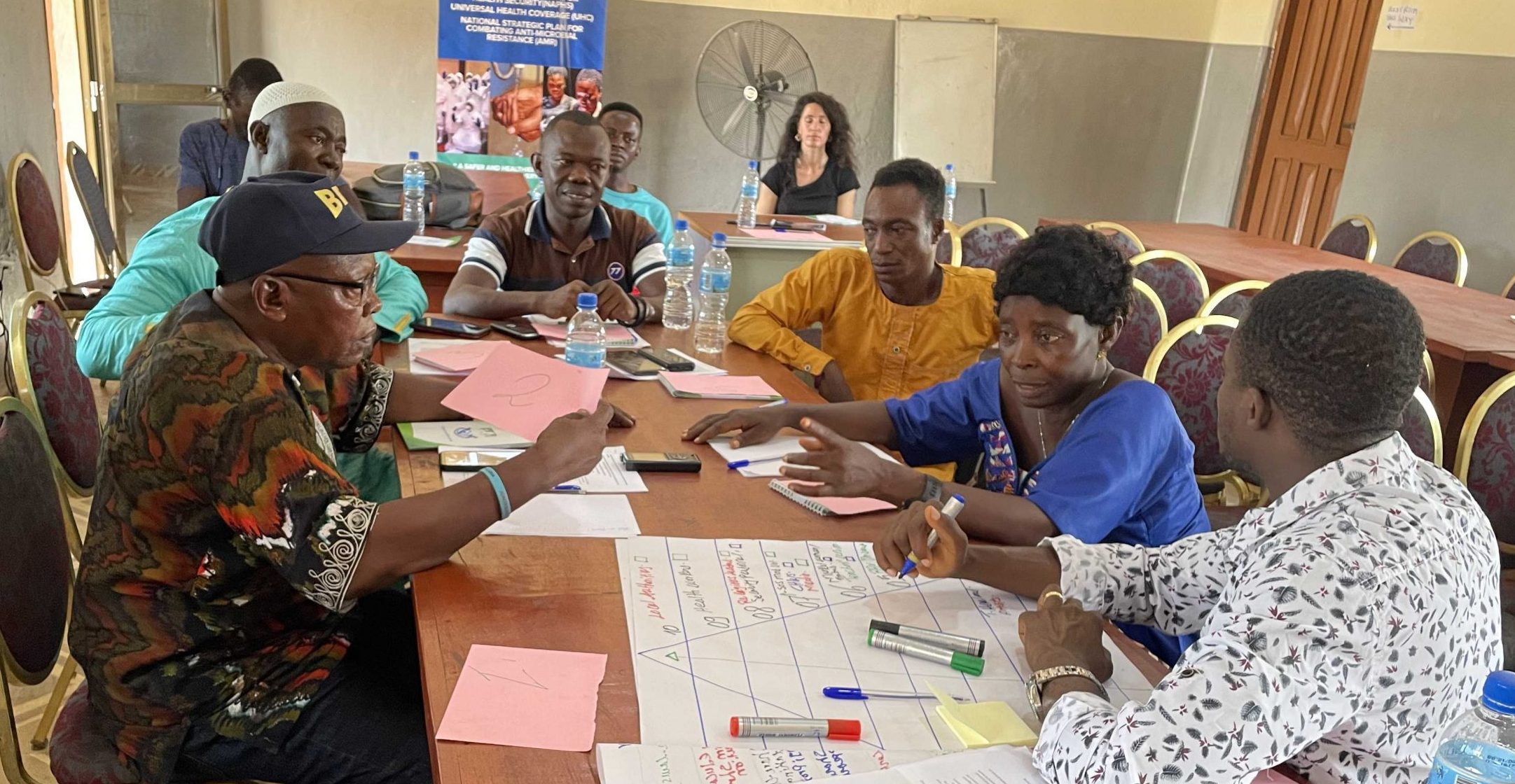
To address this gap, the ReBUILD team at the Institute for Development facilitated the creation and strengthening of local stakeholder groups in the Kailahun and Moyamba districts. These groups were established through a series of participatory workshops designed to bring together community members, health system actors, and other stakeholders.
The workshops aimed to:
- Identify power dynamics and barriers to community engagement in health decision-making.
- Develop strategies to promote inclusivity and participation in health governance.
- Establish mechanisms for ongoing dialogue and collaboration between communities and health systems.
The formation of local stakeholder groups began in early 2022, with the first series of participatory workshops held between February and April 2022. Key collaborative activities, including the placement of waste bins and the malaria bed net distribution campaign, were implemented throughout the remainder of 2022 and into early 2023. Regular stakeholder meetings and digital communications have continued since then, ensuring sustained engagement and follow-up on action points.
One participant from Moyamba reflected on the importance of these workshops, saying, “Before these meetings, we didn’t know how to approach health officials or share our concerns. Now, we feel like partners in improving health in our community.” These reflections align with findings from an evaluation study currently under review, which explores the engagement of community stakeholders in Moyamba and Kailahun districts to address health shocks and build resilience.
Key activities included:
- Participatory workshops: These workshops provided a safe space for open discussions about health challenges, power dynamics, and opportunities for collective action.
- Digital communication platforms: WhatsApp groups were introduced to ensure swift communication, share updates, and maintain momentum between in-person meetings.
- Regular stakeholder meetings: The groups convened regularly to follow up on action points, evaluate progress, and ensure accountability.
- Collaborative health actions: The groups identified and implemented health initiatives that addressed community needs, often in partnership with the District Health Management Team (DHMT) and other stakeholders.
A health worker from Kailahun noted, “The WhatsApp group has been a game-changer. We can now communicate quickly when there’s an issue, and everyone stays informed.”
Impact
The establishment of local stakeholder groups has led to intangible and tangible benefits, demonstrating the power of community-driven health action and collaborative governance. Local practice – in relation to how information and evidence is shared and considered, as well as by whom – has changed and local policies for action are also changing.
Intangible outcomes
The groups have fostered several important social and relational changes:
Increased community ownership: Community members have become more invested in sustaining health improvements, committing their time and resources to maintain ongoing actions. One participant explained, “We now see health as our responsibility, not just the government’s.”
Strengthened collaboration: The groups have fostered stronger relationships between communities and health system actors, creating a foundation for more integrated and responsive health governance. A DHMT representative noted, “We have learned to listen
more to the community. Their input has made our work more effective.”
Enhanced trust and motivation: The groups’ inclusive and participatory nature has built trust among members, inspiring collective commitment to health initiatives. One group leader in Moyamba stated, “When we trust each other, we can achieve anything. That’s what keeps us going.”
Tangible outcomes
The groups have implemented several successful initiatives, including:
Improved sanitation: In collaboration with the town council, the groups strategically placed large waste bins in high-traffic areas, such as markets, significantly improving cleanliness and reducing health risks. The funding for these waste bins was mobilized through a collaborative approach: the DHMT coordinated the initiative, while financial contributions were provided by both the local government and community stakeholders. This partnership not only facilitated resource mobilization but also strengthened community ownership of the
intervention. One community member in Kailahun remarked, “The market used to be so dirty, and people were getting sick. Now, with the bins, it’s much cleaner, and we feel healthier.”
Health campaigns with high coverage: The groups supported the DHMT in implementing a malaria bed net distribution campaign, increasing coverage from approximately 75% before the intervention to an impressive 95%. This substantial improvement was attributed to the enhanced coordination and community mobilization efforts led by the stakeholder group. A stakeholder from Moyamba shared, “We worked together to make sure every household got a net. It was hard work, but we saw the results in fewer malaria cases.”
In addition to these health initiatives, the stakeholder groups played a pivotal role in advocating for and supporting the enactment of local by-laws targeting the escalating Kush drug crisis in Kailahun. In Moyamba, their collaborative efforts led to the introduction of regulations on animal rearing, aimed at reducing road accidents, as well as the reactivation of monthly community cleaning days and the improvement of waste management through the use of repurposed bins. These outcomes demonstrate the groups’ influence beyond immediate health actions, contributing to broader community safety and well-being.
Conclusion
The ReBUILD intervention catalysed changes in local policy and practice by establishing inclusive, cross-sectoral platforms that empowered community-led action. As described above, in Kailahun the stakeholder group’s advocacy led to the enactment of by-laws targeting the escalating Kush drug crisis. In Moyamba, similar efforts resulted in regulations on animal rearing to reduce road accidents, the reactivation of monthly community cleaning days, and improved waste management through repurposed bins. These outcomes demonstrate how ReBUILD fostered collaboration, trust, and shared decision-making between communities, DHMTs, and local authorities. By embedding community leadership into local governance structures, ReBUILD for Resilience helped align health priorities with broader development goals, offering a scalable model for strengthening health systems in fragile settings.
Further information
- More on this study: Working with community leaders to address shocks, increase inclusivity, accountability and trust, and support health system resilience in Sierra Leone
- Blog post: Community engagement, inclusivity and impact in Moyamba District, Sierra Leone
- There are other ReBUILD for Resilience case studies here
Image: A focus group discussion with community leaders