Understanding and strengthening local health governance
and planning to build resilient local health systems
that leave no one behind: Nepal
Partners: HERD International, Nepal, Liverpool School of Tropical Medicine & Queen Margaret University, UK
Background
Nepal is a fragile setting that faces developmental, political and environmental challenges. Since 2015, the country has been transitioning to a federal republic with three tiers of government (federal, provincial and local or municipality), where authority is devolved to local or municipality governments to make their own plans and programmes including delivery of basic health services. This decentralisation has allowed increased decision space at local levels, although this is constrained by systemic, capacity and resource issues. These constraints include inadequate staff and absenteeism, short opening hours of facilities, poor supervision and monitoring, shortage of supplies and medicines, weak monitoring and supervision, poor referral system between levels of care, weak engagement of stakeholders and poor financial management. The COVID-19 pandemic exacerbated these issues. Strengthening the health system at the municipality level was critical. Some interventions were being implemented, however, local and context-specific evidence on how these interventions were being implemented, their effects and how they should be adapted was missing.
About the study
The aim of this study was to understand and support building resilient health systems by strengthening the capacity of local government in health sector governance and planning. This sought to enable the delivery of quality and gender-equitable basic health services that leave no one behind.
Our study design was participatory action research using a learning site. We established a learning site (Learning Site 1) in a municipality in Kapilvastu District where we worked alongside local health systems stakeholders over three years to co-produce knowledge about the local health system and promote action that will strengthen the health system to deliver gender-equitable and quality services. The action research cycle included working closely with local stakeholders to identify priority areas for action, develop and deliver interventions, and then adapt the interventions in critical reflection meetings. The cycle was undertaken three times, addressing different priority areas. This generated innovative, timely and relevant evidence with the aim of developing a stronger and more resilient health system, that is responsive, inclusive, gender-equitable and sustainable.
Our work at Learning Site 1 was followed by a study at Learning Site 2, also in Kapilvastu, to enable cross-municipality learning across the district and to implement focused interventions in a second municipality.
Outputs from this study
- Case study (2026): Building resilient local health systems through embedded learning sites in Nepal
- Paper: Mapping health system resilience in federal Nepal: perspectives and lessons from local government level
- Poster: Nepal local health system budgeting and planning process: Insights from a Learning Site in Nepal – Aney Rijal presented this poster at the 11th National Summit of Health and Population Scientists in Nepal in April 2025
- Presentation: Shophika Regmi spoke about the learning site approach in a session at the HSR2024 symposium – read the slides here
- Case study (2024): Strengthening health system through advancement of data quality, evidence generation and use in decision-making: case study from a Learning Site in Nepal
- Case study (2023): Promoting evidence-based planning by enhancing stakeholders’ understanding of local evidence
- Blog post: Health Facility Operation and Management Committees and their significance in local health governance in Nepal
- Blog post: Suprich Sapkota was an embedded researcher at the learning site for about two years. Here he describes his experience and thinking on health worker motivation.
- Presentation: Shophika Regmi spoke about the learning site approach in a session at the HSR2022 symposium – watch the video here
- Blog post: ‘We did our best’ – Resilience in the local health system in response to COVID-19 – written by the ReBUILD team following a visit to the municipality in September 2022
- Case study (2022): Building understanding of health system resilience in our Nepal learning site
- Video: An introduction to the Kapilvastu learning site
- Blog post: Building a resilient local health system in Nepal
Watch Shophika Regmi talk about the HERD team’s learning site work
Top image: Kapilvastu Hospital (located in our learning site) during the COVID-19 pandemic. Patients can be seen being treated outside the hospital due to lack of space inside.
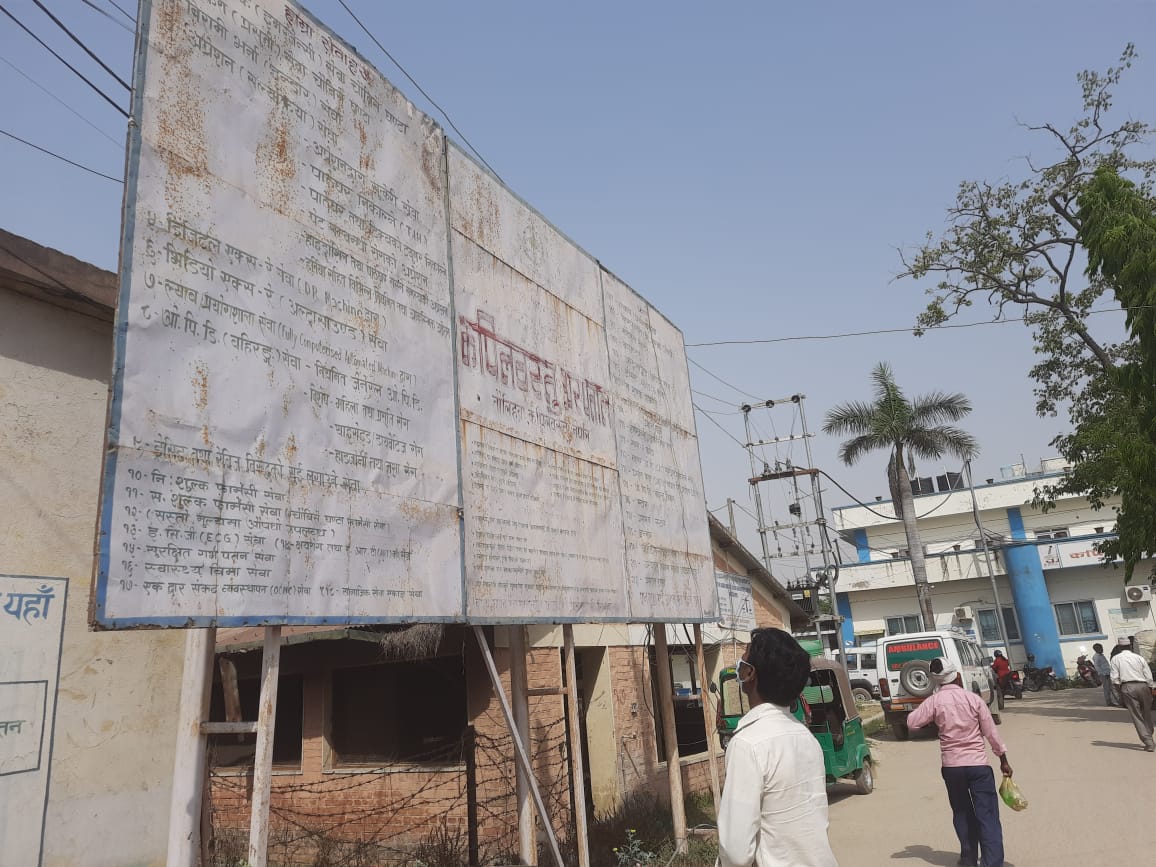
Bottom image: A man looks at a Citizens’ Charter installed outside Kapilvastu Hospital. The charter contains information about services, costs, departments etc to give patients easy access to services.