Development assistance for health reductions: early impacts and responses in four fragile and shock-prone (FASP) countries
Read this Social Science & Medicine – Health Systems paper here [opens new tab]
This study is one of the first studies to our knowledge of impact of health aid cuts in fragile settings and how countries have responded.
The paper examines four fragile and shock-prone (FASP) settings – Lebanon, Nepal, Sierra Leone and Somalia – to understand the aid-related risks they faced prior to the recent shock, the impacts that reductions have had on their health systems, and whether (or how) they have been able to navigate these changes.
In it we highlight resilience strategies in responding to aid cuts, including some ability to absorb and adapt in the less dependent settings. The paper identifies resilience enablers and barriers, the latter including structural weaknesses, depletion of absorption reserves through repeated recent shocks, development of an aid-dependent mentality amongst leadership, as well as tight fiscal space
In the course of the study, no transformatory strategies were identified, which is to be expected, given the rapid nature of the shock and the fragile contexts
Overall we find that resilience should be considered not just on the public sector side but also on the side of the aid ecosystem, which responded in diverse ways in these contexts, not all of them helpful.
Read this Social Science & Medicine – Health Systems paper here [opens new tab]
Suggested citation
Witter S, Moussallem M, Gautam G, Hajii O, Osborne A, Kamara H, Kouider N, Bou-Orm I, Baral S, Bertone MP,
Development assistance for health reductions: early impacts and responses in four fragile and shock-prone (FASP) countries, SSM – Health Systems, 2026, https://doi.org/10.1016/j.ssmhs.2026.100321.
Further information
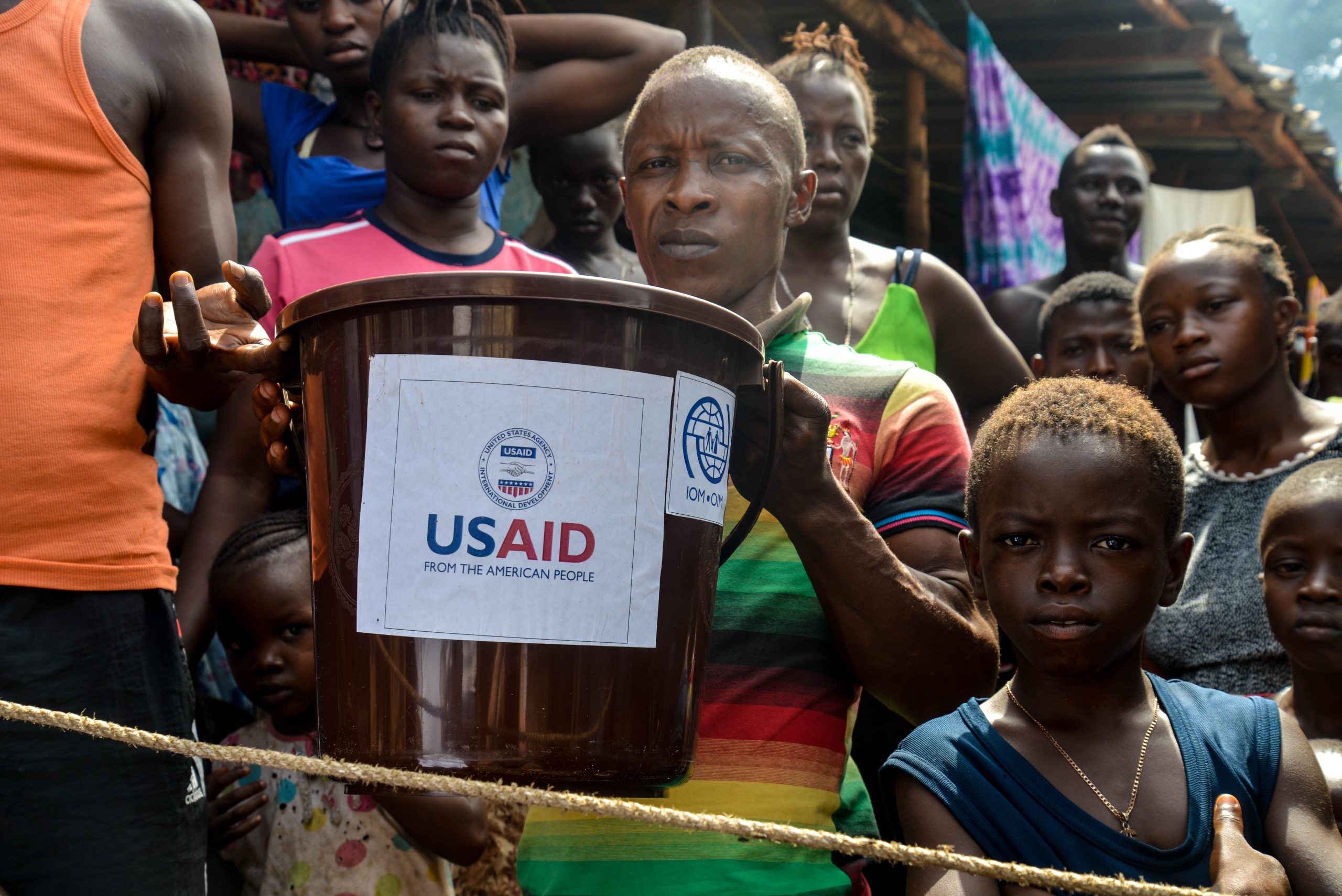
Image: A quarantined family in Sierra Leone receives an emergency interim care kit. © Paloma Clohossey / USAID / OFDA 2015. Via Flickr