From distrust to shared action: How community platforms and radio strengthened health system relationships in Moyamba and Kailahun, Sierra Leone
In Moyamba and Kailahun Districts, Sierra Leone, community members once described health services as under-resourced, difficult to access, and hard to trust. Over time, and especially following ReBUILD for Resilience’s engagement, that began to change. This case study, by the Institute for Development, explores how stakeholder platforms and community radio helped build trust, strengthened accountability, and supported more responsive health governance in two districts shaped by repeated shocks.
Background
In Moyamba and Kailahun, the starting point for the local health system was poor. Before 2020, residents described weak infrastructure, shortages of staff and medicines, limited outreach capacity, and poor patient experience. In both districts, trust between communities and health services was low. The legacy of the Ebola epidemic deepened fear and distance between health workers and communities, while practical challenges, such as fuel shortages, referral delays, and inadequate facility conditions, reinforced the sense that the health system was not meeting local needs. As one community stakeholder in Moyamba recalled, before Ebola there was, “Not a direct link between the community and the health workers”.
Improvements began after 2020, shaped by the post-Ebola recovery and the experience of COVID-19. However, the period following ReBUILD for Resilience’s engagement was described as a more significant turning point, not only in service delivery, but in how communities and the health system worked together.
What problem is being addressed?
Although communities play an important role in promoting health, communities in Moyamba and Kailahun described a pre-intervention context in which formal health governance offered few meaningful opportunities for community participation. Health decision-making was widely perceived as the responsibility of health professionals and government actors, while community members had limited voice, weak access to information, and few trusted channels through which to raise concerns or influence services. As one research participant explained, “before, people thought health was only for the nurses and doctors; the community did not feel it was their responsibility” (Community stakeholder, focus group discussion (FGD), Kailahun). This disconnect contributed to low trust, weak accountability, and limited community ownership of health system processes.
This disconnect had practical consequences. Many people avoided health facilities because of negative experiences with health workers, lack of medicines, or costs associated with care. Pregnant women were sometimes discouraged from attending clinics because of hostile staff attitudes. Community members often relied on pharmacies or home treatment instead of seeking professional care. In Moyamba, participants also described persistent service delivery and infrastructure gaps, particularly ambulance delays linked to fuel shortages and the lack of a district mortuary. These weaknesses imposed substantial financial and emotional burdens on families, who were often forced to transport bodies to Bo District for mortuary services.
At the same time, communities and local authorities lacked regular fora to discuss shared health challenges and agree on action. As a result, problems such as poor sanitation, low facility use, misinformation, and weak accountability were harder to address collectively.
What did we do?
To help address these gaps, ReBUILD for Resilience used an embedded research approach to support stakeholder engagement processes in Moyamba and Kailahun that connected communities, health workers, District Health Management Teams (DHMTs), local authorities, religious leaders, traditional leaders, women’s groups, and civil society actors.
A central part of this work was the establishment of regular multi-stakeholder meetings. Participants described these meetings as a major shift in district health governance, with one noting: “Before ReBUILD came, we never used to sit together with the health workers and the government people to discuss our health problems; now we do it every month and they listen to us” (Community stakeholder, FGD, Kailahun). These meetings helped normalise community participation and made district-level dialogue around health more routine and inclusive.
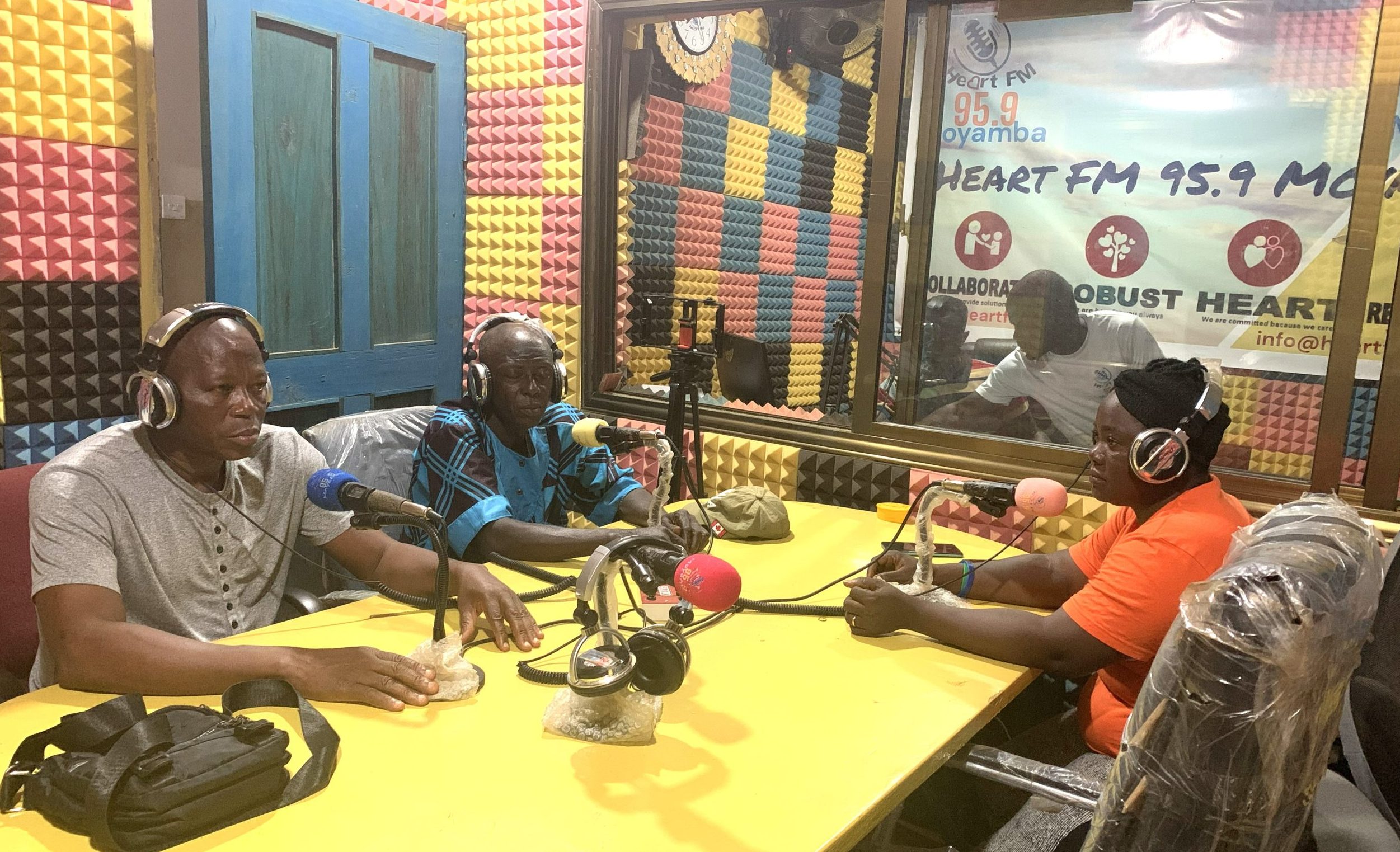
ReBUILD also supported community radio programmes, which participants consistently described as one of the most effective parts of the intervention. Radio was used to share health information, raise community concerns, clarify rumours, and support communication during disease outbreaks. As one participant explained, “In the case of any bad rumour or disease outbreak they’ll go on air to clarify these rumours and not allow it to spread any further” (Community member, FGD, Kailahun). This was especially important in remote areas, where, as another stakeholder noted, “Radio is the most powerful communication channel available, instantly connecting thousands of listeners across Kailahun and beyond” (Community stakeholder, NGO, Kailahun).
Together, the stakeholder meetings and radio programmes created a practical feedback loop between communities and the health system. Issues raised in meetings could be amplified through radio and were seen as more likely to receive attention from local authorities and health actors. In Moyamba, one participant linked this directly to local advocacy, explaining that “when we go to the radio and talk about the problem, people adhere to the request” (Community stakeholder, FGD, Moyamba).
The intervention also strengthened local ownership through the development of community byelaws on sanitation, environmental management, and maternal health, including discouraging home delivery. Participants described these byelaws as community-endorsed accountability mechanisms that reinforced behaviour change. As one stakeholder stated, “We have made byelaws on home delivery and if you don’t follow them you will be fined; the community agreed to this and now people are following the rules” (Community stakeholder, FGD, Kailahun).
Impact
Participants described a range of changes that followed these interventions, particularly in trust, participation, health-seeking behaviour, and local accountability.
Increased trust and stronger relationships
One of the most important changes was relational. Participants reported that communities, DHMTs, and other stakeholders were increasingly working together rather than operating in isolation.
This reflected a broader shift from distrust and fragmentation to communication and joint problem-solving. Where communities had once felt excluded from health decision-making, many now described a more open and respectful relationship with health authorities.
More meaningful community participation
Before the intervention, many participants said they had never had the opportunity to sit with health workers and government actors to discuss their health concerns. After ReBUILD’s engagement, stakeholder meetings became a regular feature of local health governance. Participants described this as a major change, because community voices were now more visible and more likely to influence action. This shift helped communities move from being passive recipients of services to active contributors to local health solutions.
Improved health-seeking behaviour
Participants linked these improvements in trust and communication to greater use of health services, particularly in maternal and child health. Communities reported better antenatal care attendance and fewer home deliveries, which they attributed to sensitisation, byelaw enforcement, and improved relationships with health workers. As one participant explained, “now the pregnant women are going to the clinic from the first day they know they are pregnant until they deliver; before, they would only go once or twice and then deliver at home” (Community stakeholder, FGD, Kailahun).
Participants also described a broader shift from avoidance to engagement with formal health services. Whereas some community members had previously preferred buying medicines directly from pharmacies, more people were now attending health facilities, encouraged by improved provider attitudes and stronger community awareness. One participant reflected this change, stating that, “This 2025 we notice that the hospital has upgraded and the township people are happy to visit the hospital; before this time the people would not visit the hospital because of the attitude of some practitioners, especially the nurses” (Community member, FGD).
Better health communication and outbreak awareness
The radio programmes were widely seen as a trusted and effective communication channel, especially for remote communities. Participants said radio helped spread health information, counter rumours, support disease prevention, and sustain awareness during outbreaks. It also helped connect people across communities, including those with limited access to face-to-face meetings.
In this way, radio served not only as a communication tool, but also as part of the districts’ resilience infrastructure. Participants linked this to lessons learned from Ebola and COVID-19, where timely communication and trusted local engagement were critical.
Local action on sanitation and environmental health
Participants also described visible action on sanitation, including cleaner public spaces, waste management efforts, and enforcement of local sanitation byelaws. In Moyamba, radio advocacy was seen as helping to mobilise collective action around the pollution of the Yamba Two River and prompting a response from local authorities and traditional leaders. As one participant explained, “when we go to the radio and talk about the problem, people adhere to the request” (Community stakeholder, FGD, Moyamba). In both districts, health and environmental issues were increasingly viewed as shared community concerns rather than private or individual problems.
The development and enforcement of community byelaws was an important part of this shift. Participants described these byelaws as evidence that communities were not only receiving health messages but also taking ownership of the conditions affecting their health.
Other contributing factors
ReBUILD’s work took place alongside several other important initiatives, including post-Ebola recovery investments, COVID-19 response measures, WASH programmes, nutrition interventions, and support for DHMT operations from other partners.
These interventions also contributed to improvements in health services and community outcomes. However, participants consistently distinguished ReBUILD’s contribution in terms of its focus on relationships, communication, accountability, and participation. While other programmes often strengthened infrastructure, supplies, or service delivery, ReBUILD was especially associated with creating the connective spaces through which communities and health actors could identify problems, build trust, and act together.
Sustainability and remaining challenges
Participants expressed strong support for continuing the stakeholder meetings, radio programmes, and community byelaws after the project period. Many felt these structures had become embedded in the way communities and district health actors now work together. The regularity of stakeholder dialogue, and the expectation that community concerns should be heard, were seen as important changes that should not be lost.
At the same time, concerns about sustainability remained. Participants noted that some activities, especially radio and meeting logistics, still depended on external funding. In some cases, even modest support, such as transport for meetings, helped sustain participation. More broadly, persistent structural challenges continue to affect both districts, including medicine shortages, weak referral systems, unreliable ambulance fuel, staff shortages, inadequate accommodation for health workers, lack of a mortuary in Moyamba, and limited health financing overall. These issues do not erase the gains made, but they do shape how durable those gains may be over time.
Conclusion
The experiences of Moyamba and Kailahun show that health system strengthening in fragile settings depends not only on infrastructure and services, but also on trust, inclusion, and shared responsibility. ReBUILD for Resilience helped create spaces where communities, health workers, and local authorities could meet, communicate, and act together. Through stakeholder platforms and radio programming, the intervention contributed to stronger accountability, improved health-seeking behaviour, and more collaborative local governance.
While these gains were supported by a wider landscape of health interventions, ReBUILD made a distinctive contribution by strengthening the relationships that connect communities and health systems. In settings shaped by repeated shocks, those relationships are not a soft extra. They are part of the system’s core resilience. The case also offers a wider lesson: resilient health systems are built not only in moments of crisis, but through the everyday practices of dialogue, trust-building, and shared action between communities and institutions.
Further information
There are other ReBUILD for Resilience case studies here
Image: ReBUILD Radio programme in Heart FM