Crossing lines: Health systems and forced migration through a cross-border lens
Forced displacement today is neither temporary nor peripheral – it is a defining feature of our era of crisis, driven by intersecting conflicts, climate shocks, and political instability.
Health systems are increasingly challenged by the scale and complexity of forced displacement, with current responses falling far short of needs. Borders act as filters, determining who can access services, what level of care is available, and how resources flow. Meanwhile, fragmented governance and financing force humanitarian and development actors to navigate complex, overlapping systems. Separate funding streams and policies typically apply to refugees versus internally displaced persons (IDPs); parallel health services proliferate when parts of a country lie outside government control, resulting in duplication, gaps, and inefficiencies in coverage for displaced groups. In LMICs, health systems are often under resourced and overstretched even before displacement occurs.
Policy discussions often treat “forced migrants” as a single category, but refugees, IDPs, and other displaced groups (e.g. stateless persons) experience health systems very differently. A refugee who crosses into a neighbouring country may access that country’s clinics (or parallel refugee programmes), but an IDP in a conflict zone might rely on a humanitarian mobile clinic or an NGO hospital operating outside government oversight. Recognising these differences reveals
structural barriers and opportunities in each context. Adopting a “cross-border lens” means classifying displacement contexts by the borders involved (international vs. internal) and the nature of governance across those borders (stable state vs. limited statehood).
This cross-border lens, which is explored in this brief, illuminates how health system responses differ and informs tailored strategies to strengthen resilience beyond one size- fits-all models.
Further information
Paper: Rethinking cross-border health systems for contexts of mobility and forced displacement
More of ReBUILD’s work on migration, IDPs and refugees can be found here.
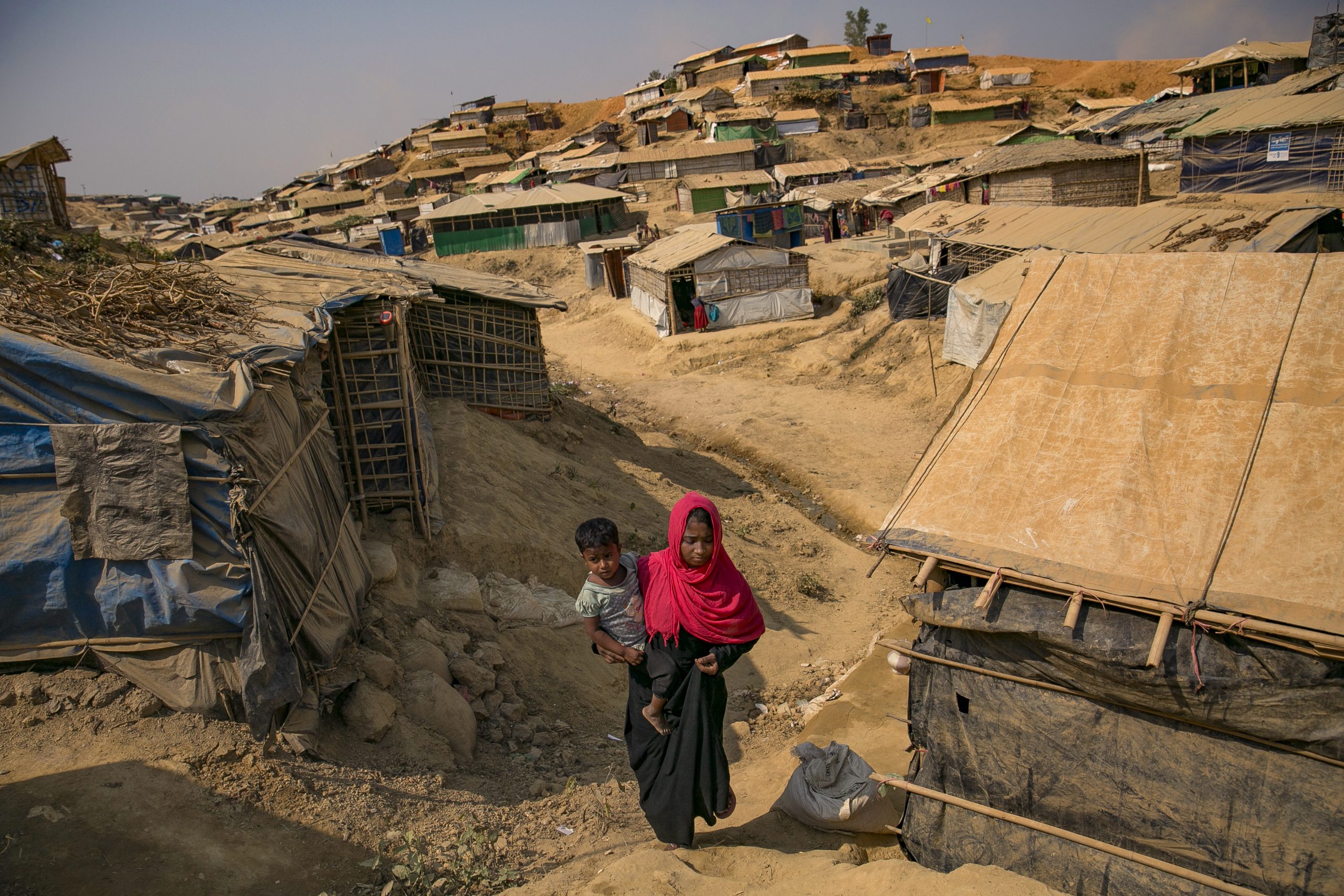
Image: Rohingya women in Cox’s Bazaar refugee camp, Bangladesh. UN Women via Flickr [opens new tab]