About Institute for Global Health and Development
The Institute for Global Health and Development (IGHD) is a multidisciplinary centre for postgraduate education and research, addressing health and development challenges in low and middle-income countries and their connection to global systems and trends. Their work is characterised by:
• a multidisciplinary approach rooted within the social sciences
• a commitment to research which provides a critical perspective on issues and points towards tangible actions to address them and
• a concern to address the health and well-being of those in greatest need
IGHD co-leads ReBUILD for Resilience. For specific projects that the team is supporting, see below.
More on the Institute for Global Health and Development on its website [opens new tab]
Institute for Global Health and Development and ReBUILD for Resilience
IGHD brings a wide range of expertise to ReBUILD for Resilience, including on health financing and economics, health system dynamic modelling, evaluation of complex interventions, participatory action research, impact evaluation, political economy and health policy analysis, and systematic reviewing.
IGHD-supported projects
- Health systems strengthening and resilience-building in fragile and conflict-affected settings
- Aid and health system resilience in fragile and shock-prone settings: reflections from ReBUILD for Resilience
- Strengthening health system financing in complex humanitarian contexts: An exploratory analysis from Northwest Syria
- The role of the diaspora in supporting health system resilience in fragile and shock-prone settings
- Embedding Social Network Analysis in Health Systems Resilience Research
- Assessment of the policy context and climate resilience capacity of health systems in Nepal
- Liminal health systems: health seeking behaviour of migrants and internally displaced people from Myanmar along the Thailand-Myanmar border
- Taking the long view: What can we learn about health system resilience in fragile contexts from Afghanistan (1989-2024)?
- Young people’s mental health and psychosocial wellbeing in a fragile setting: formative research to strengthen community mental health systems in Myanmar
- Strengthening subnational health systems through support to public procurement and financial management: lessons from a technical assistance programme in Nepal
- Provision of mental health and psychosocial support services to health workers and community members in conflict-affected Northwest Syria: a mixed-methods study
- The role of non-state actors in health service delivery and health system resilience in Myanmar (2015-22)
- Cultivating inclusive, coordinated networks between climate stakeholders in Bangladesh to enhance health system and community resilience to climate shocks and stressors
- Health system resilience in Ethiopia’s Tigray region
- Understanding health system resilience to respond to COVID-19 in a federalised context: a case study of health workforce management at sub-national level in Nepal
- Health system resilience amid outbreaks: understanding the politics of sexual and reproductive health service adaptation in eastern Democratic Republic of Congo
- Cross-country learning on health system resilience: synthesis of OPM findings on the role of community health workers in COVID-19 and on governance for health system responses to emergencies
- Understanding and strengthening local health governance and planning to build resilient local health systems that leave no one behind: Nepal– a learning site study
- Strategies to support community health workers working in fragile urban contexts: a case study of the anglophone regions in Cameroon
- Implementation of the reproductive, maternal, newborn, child, and adolescent health policy in Sierra Leone: dynamics, challenges, and opportunities faced by policy implementers at the national and sub-national levels
- Exploring approaches for complementary private sector engagement in the health sector in Northern Syria
- Working with community leaders to address shocks, increase inclusivity, accountability and trust, and support health system resilience in Sierra Leone
- Community and health system stressors and coping mechanisms during COVID 19: case study from Myanmar
- Political economy, health financing and the role of shocks: case studies in Nepal and Thailand
- Disaster-resilient public financial management– webinar and brief
- Bringing political economy thinking into global health financing policy and practice in fragile and shock-prone settings
- Brief: The role of non-state actors in health systems resilience: using and developing their capacities
- Paper: The role of non-state actors in health system resilience: Exploring and developing their capacities in fragile and shock-prone setting
- Paper: Financial autonomy of facilities providing primary care services in low- and middle-income countries: assessing the evidence to inform the development of a typology and conceptual framework
- Podcast: Revisiting resilience in health systems research
- Podcast: Non-State and Informal Actors in Fragile Settings
- How-to Guide: Political economy analysis for health financing
- Brief: Coordination for health system resilience – what, why and how?
- Case study (2026): Supporting knowledge sharing through the Thematic Working Group on Health Systems in Fragile and Conflict-Affected Settings
Professor Sophie Witter
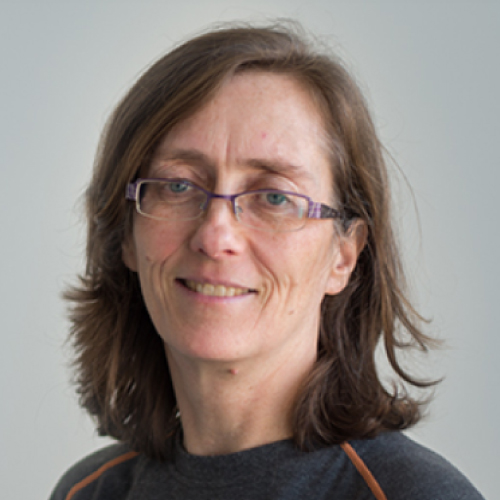
Research co-director
Sophie is a health economist and health system researcher, whose work has spanned more than 30 years and countries across Africa, Asia-Pacific, Central Europe and the Middle East. She has successfully led multi-disciplinary, multi-country research teams to timely and effective completion, with a strong focus on evidence into practice.
Sophie’s health system and policy research networks are extensive (she is an active and highly sought-after technical advisor) and she works closely with FCDO, other funders, academics and global health networks, as well as developing capacity through collaborations, teaching and mentoring.
Sophie is Professor of International Health Financing and Systems at IGHD where she is leading a programme of research on the integration of refugee health care, working with UNHCR. Her recent research work has focused on fragile and conflict-affected states, understanding resilience in shock-affected health systems, health system strengthening, fostering learning in health systems, evaluation of complex health system interventions, embedded development and research, alongside health financing and human resources for health.
Contact Sophie on via the IGHD website [opens new tab]
Dr Maria Bertone
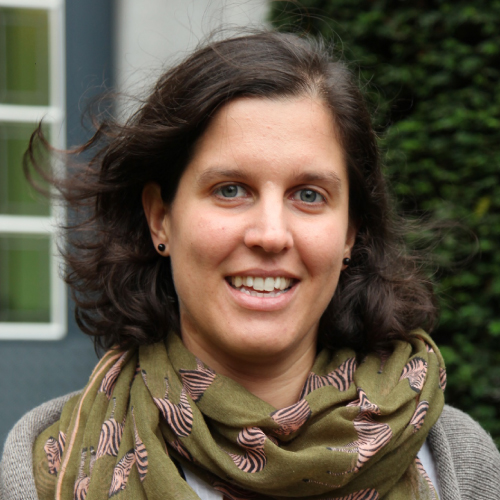
Researcher
Maria’s research explores health systems strengthening, health governance and health financing, with a focus on recovery in fragile and conflict-affected settings. She is particularly interested in the political economy dynamics that define the design, implementation and adaptation of health systems policies in fragile contexts. Under the ReBUILD consortium, she has conducted research in Nepal, Myanmar, Sierra Leone, DR Congo, and Tigray region of Ethiopia. She is also working on a UNHCR-funded research project looking at health system integration for refugees.
Prior to working in academia, Maria provided technical advice to the Ministry of Health of Burundi, through the Overseas Development Institute Fellowship and then as consultant in numerous countries including DR Congo, Cote d’Ivoire, Rwanda, Chad, Benin, Laos, Comoros and Botswana.
Maria is the Chair of HSG’s Thematic Working Group on Fragile and Conflict-Affected States. [Opens new tab]
Contact Maria on via the IGHD website. [Opens new tab]
Professor Karin Diaconu
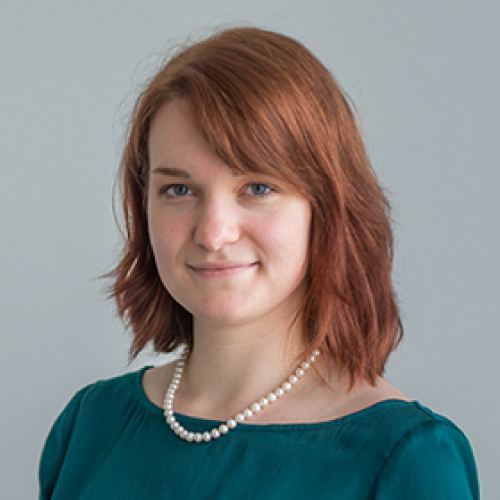
Researcher
Karin is a health scientist with a particular interest in health service delivery and function in low- and middle-income countries and humanitarian settings. Her research priorities include community capacities during/post humanitarian crisis, health technology assessment, priority-setting and the evaluation of interventions and service delivery initiatives via mixed-method approaches.
Karin is currently one of the research fellows active in the Research Unit for Health in Situations of Fragility, focused primarily on supporting research in the Middle East, including evaluations of mental health, diabetes and hypertensive care delivery and uptake among vulnerable Lebanese and Syrian populations in Lebanon. She is also the lead analyst for a clinical trial examining the effectiveness of a provider-targeted performance-based financing scheme for strengthening tuberculosis management in Georgia.
Contact Karin via the IGHD website. [opens new tab]
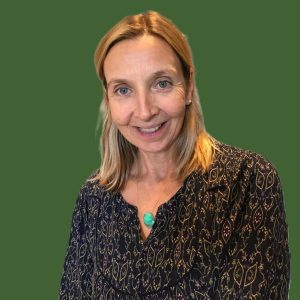
Dr Natasha Palmer
Researcher
Natasha is a health economist specialising in health financing policy and health systems research in low- and middle-income countries. She has 30 years experience in these areas, working first in development agencies/NGOs and then at London School of Hygiene and Tropical Medicine, various consulting positions and joined QMU Edinburgh in 2023.
In her research to date she has had a particular focus on approaches to private sector engagement (particularly contracting, sometimes with a focus on fragile and conflict-affected settings), health financing and health systems. Recent work has focussed on the approach to health systems strengthening of key Global Health Initiatives and options to improve approaches to both evaluating and investing in this area. Natasha is leading a case study of investments in the health system in Afghanistan in the last 20 years, with a focus on lessons for fostering resilience.
Mariel Horncastle

Institute officer
Mariel supports effective project administration within IGHD, contributing to the logistical planning and smooth operation of active research initiatives.
Before joining IGHD in 2024, Mariel worked in the youth charity sector in Canada for five years and has been an active member of inclusion and advocacy networks in New Brunswick—including Special Olympics, Easterseals, and Best Buddies—since 2014.
She holds an MSc in Global Health Policy from the University of Edinburgh, where her postgraduate dissertation examined barriers to equitable, culturally appropriate, and trauma-informed maternity care for Indigenous women, gender-diverse, and Two-Spirit individuals across Canada.
Through her work with ReBUILD, Mariel contributes to research on strengthening health systems in fragile and conflict-affected settings, with particular attention to equity, ethics, and inclusion in research practice. She presented the consortium’s study, “Resilience in Fragile Health Systems: Coping with COVID-19 in Liberia, Sierra Leone, Lebanon, and Gaza,” at the 11th International Conference on Public Health (ICOPH) in Bangkok, Thailand.
Her research interests include sexual and reproductive health among disadvantaged populations and co-production approaches that centre the voices of local researchers and communities in global health
The ReBUILD for Resilience partners are:


The team is supported by research associates