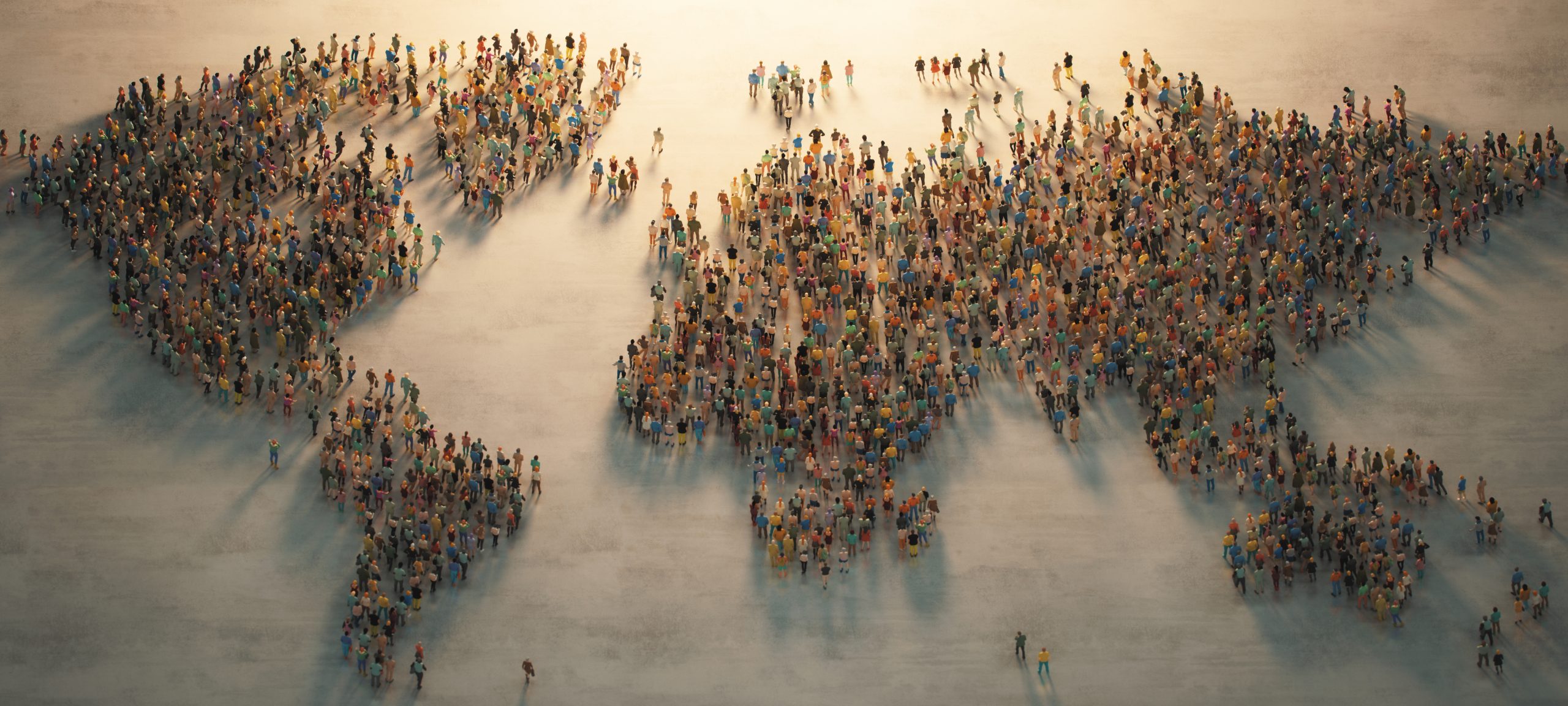
A diverse crowd of people forms the shape of a world map, all facing a central light source, symbolizing unity, hope, a shared future and diaspora.
Webinar: Diaspora and health systems resilience in fragile settings: Findings from ReBUILD for Resilience
14 October 2026
Wednesday 18th November, 12 – 13.30 UTC
Registration link to follow (Zoom)
Diasporas – people who have moved away from their home countries but still retain links – are increasingly recognised as important actors in development. However, little attention has been paid to how they support health systems. In ReBUILD, we identified that diasporas are often a key resilience support for health systems in fragile and shock-prone settings, and we set out to examine how this is enacted.
In this 90-minute webinar, we share findings from five country case studies, conducted alongside a global study component, and unpack the implications for global, regional and national actors, including diaspora networks. With increased global risks and fragility and decreases in global stabilising mechanisms, the need is more urgent than ever to help realise the full potential of the diaspora to support health system resilience.
Special edition
This webinar will also see the launch of a special supplement of the BMJ Global Health which showcases ReBUILD’s diaspora work.
Speakers and panellists
- Chair – Professor Sophie Witter – Queen Margaret University, UK
- Dr Alaa Dafallah – University of Oxford, UK
- Dr Aula Abbara – Imperial College London, UK
- Dr Elsheikh Badr – United Arab Emirates University
- Halimatu Kamara – Institute for Development, Sierra Leone
- Dr Ghanshyam Gautam – HERD International, Nepal
- Dr Rouham Yamout – American University of Beirut, Lebanon
- Dr Kyu Kyu Than – Burnet Institute, Myanmar
Further information
Study: The role of the diaspora in supporting health system resilience in fragile and shock-prone settings
Image: imaginima via iStock