Health systems strengthening and resilience-building in fragile and conflict-affected settings: Experiences and operational perspectives of international NGOs
The study aims to address this gap, by gathering the experiential and operational perspectives of practitioners engaged in HSS in a range of fragile settings. Data was collected through 42 semi-structured and photo elicitation interviews, and review of documents shared by participants (n = 63). Interviews were with HSS practitioners, mostly working for international NGOs and engaged in HSS programming in FCAS.
Findings highlight the challenges of HSS programming in fragile and insecure settings and the tension between HSS, humanitarian priorities and funders’ agendas, but also point to potential ways forward for embedding HSS and health system resilience into humanitarian and early recovery responses. These include better ways of working with unrecognised authorities and non-state actors, improved coordination and integration, flexibility and longer funding cycles, and a shift in how HSS programme performance is measured. These approaches require intentional HSS programming, and clear incentives and supportive structures for NGOs that do not simply shift risks from funders to implementing agencies. Knowledge gaps on HSS programming that NGOs need to address are also identified. We conclude with a reflection on the relevance of our findings and of HSS in FCAS in the current context of reduced aid funding.
Further information
Study: Health systems strengthening and resilience-building in fragile and conflict-affected settings
This paper is part of a Social Science and Medicine – Health Systems special edition Developing health systems resilience in fragile and shock-prone settings: Findings from the ReBUILD for Resilience Consortium [opens new tab]
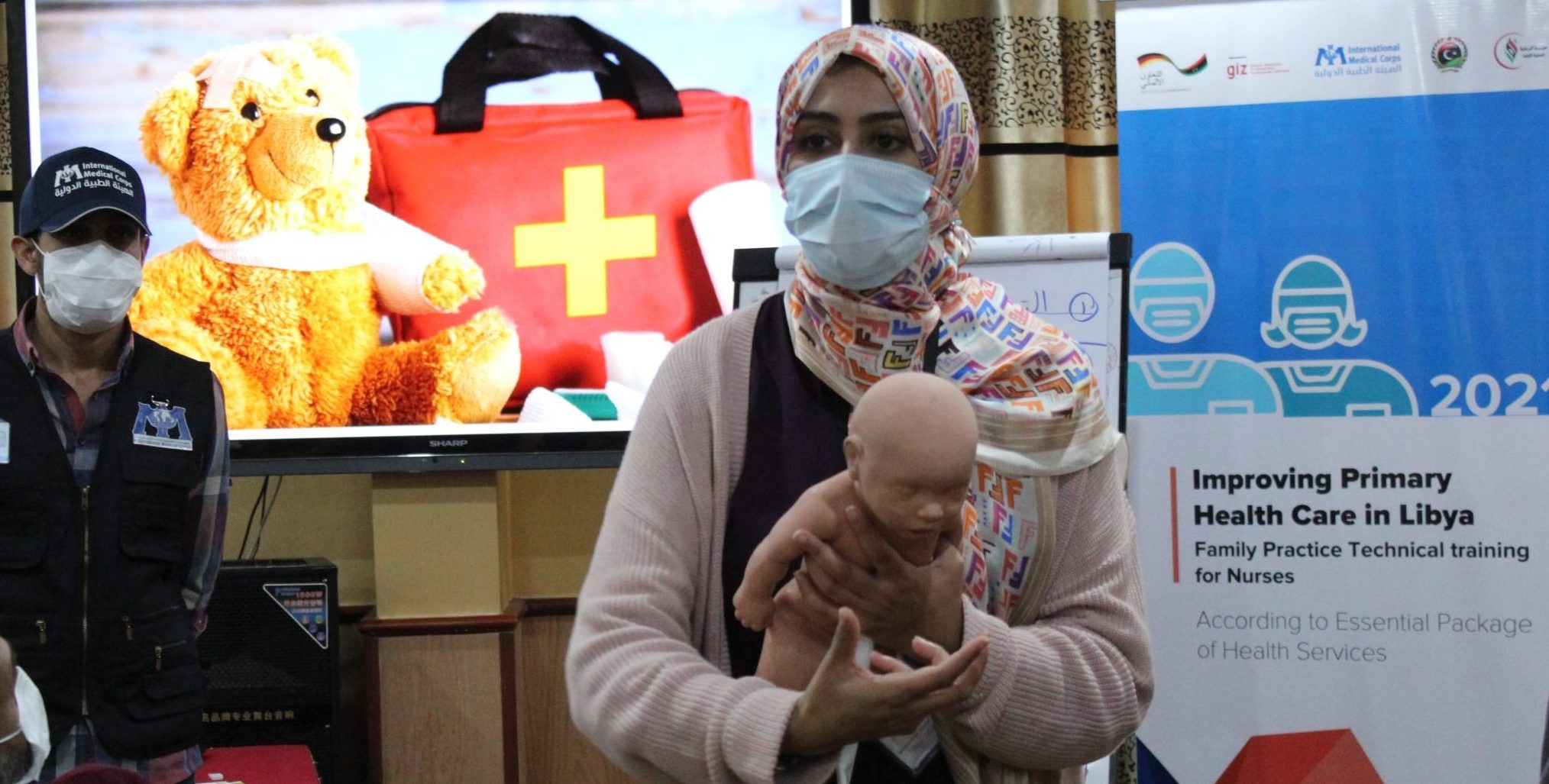
Image: A primary health care institute in Libya, working towards health system strengthening. Courtesy of International Medical Corps. The image features in the photo elicitation booklet developed in the study.