Lessons on health system strengthening from Shuddhodhan Rural Municipality
17 February 2026
HERD International reports from our learning sites in Kapilvastu district, Nepal.
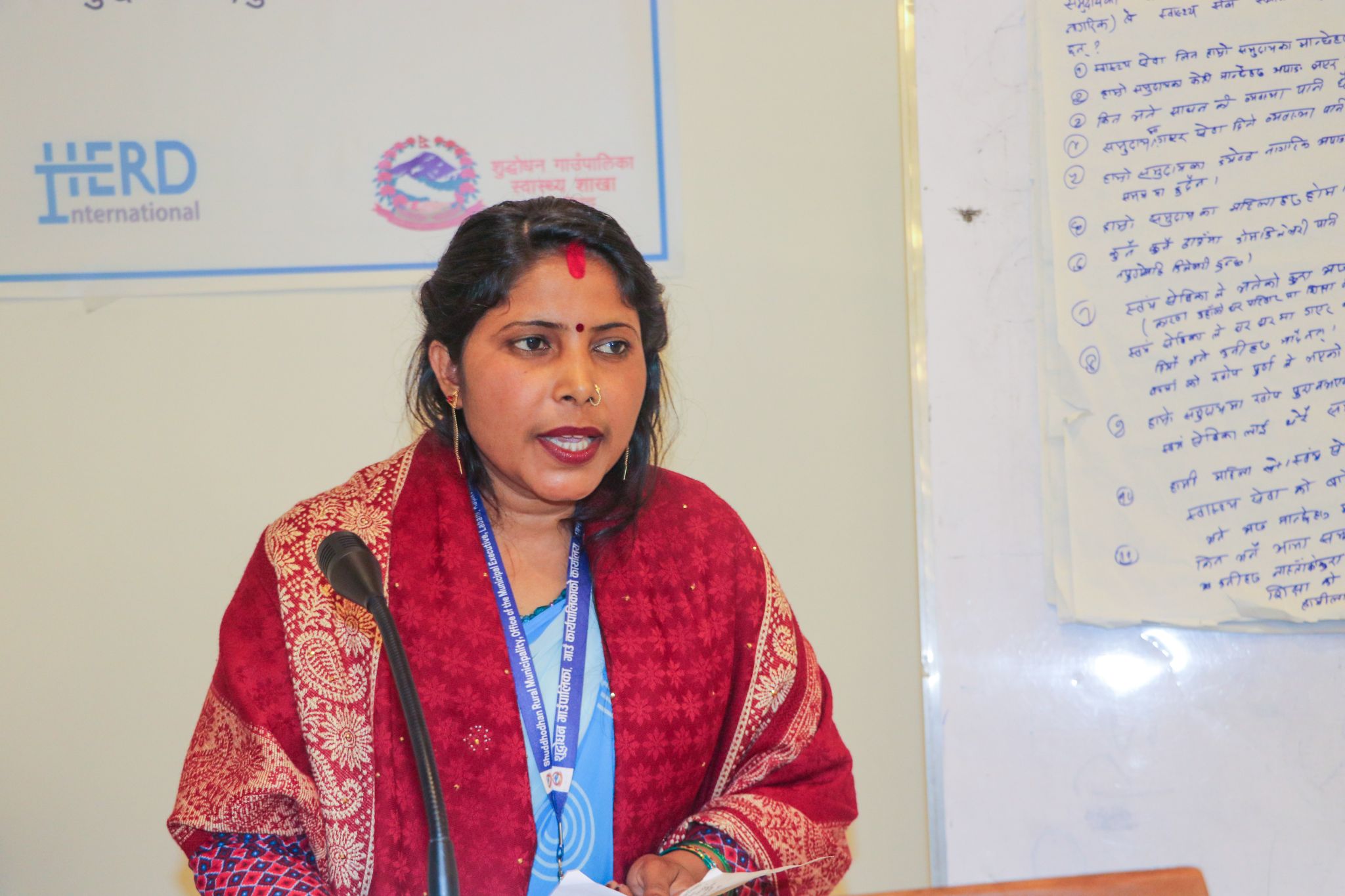
Members of Shuddhodhan Rural Municipality in Kapilvastu District, Lumbini Province recently attended a learning-sharing event, during which they shared their experiences and lessons learned from initiatives implemented over the past two years to strengthen health system resilience in the municipality.
To make the local health system more efficient and responsive, the Rural Municipality adopted an e-bidding system for medicine procurement and supply management, ensuring the timely availability of medicines, safe storage, regular expiry-date checks, and a strengthened record-keeping system. Health workers have received training in key areas including maternal and newborn health, health management information system (HMIS), family planning, immunization, nutrition, and non-communicable diseases, according to the Health Section.
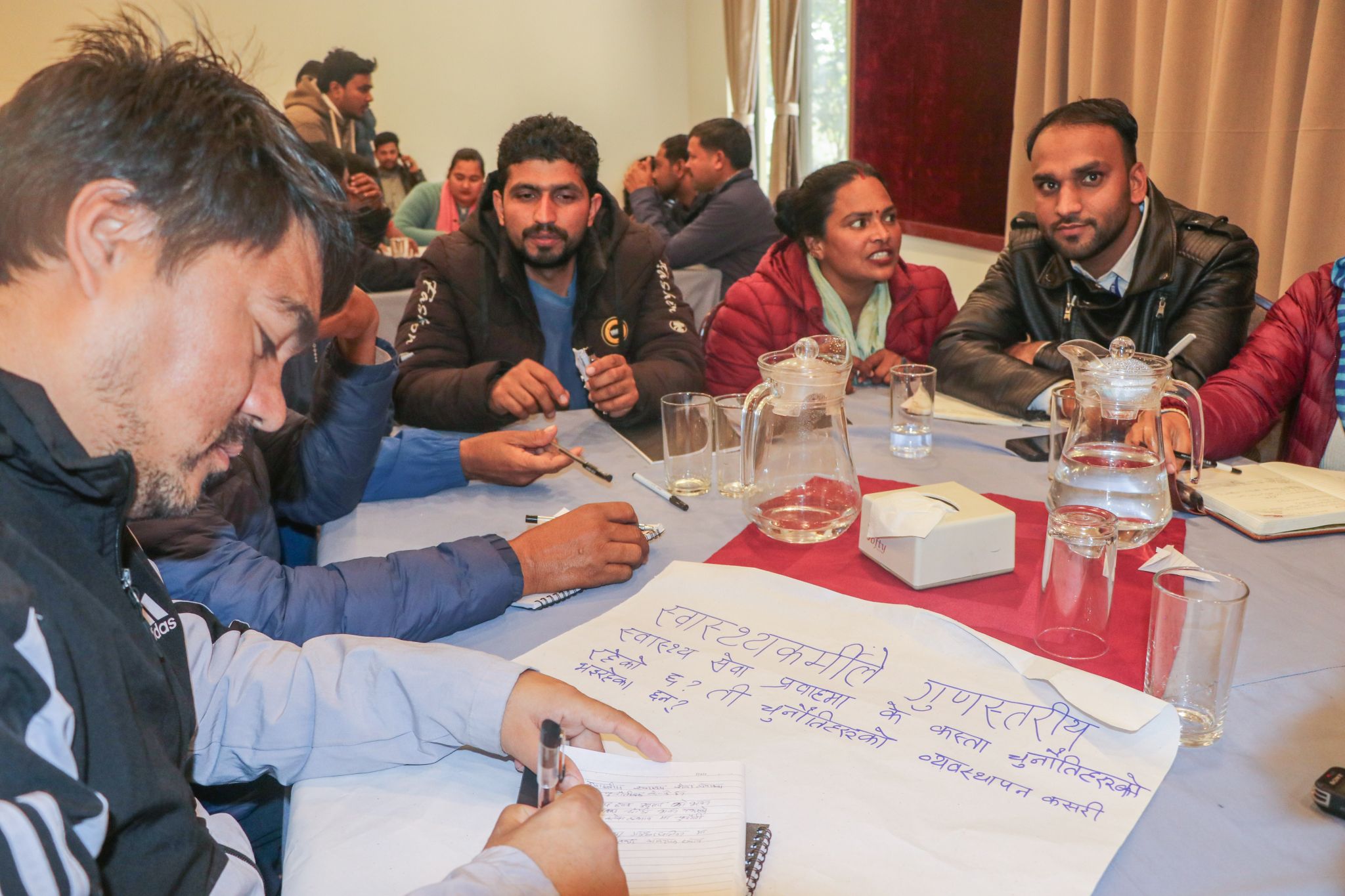
The Health Section also noted that efforts to strengthen the capacity of Female Community Health Volunteers and health mothers’ groups, along with community dialogue sessions on health risks and service-seeking behaviours, and regular coordination and collaboration among health workers at the community level, have increased trust, motivation, and effective implementation of health plans.
While these efforts have resulted in notable improvements in data quality, maternal health services, governance, and community participation, stakeholders acknowledged that several challenges remain. These include inadequate standard-compliant physical infrastructure and medical equipment in some health facilities, limited activeness of health facility operation and management committees, and the ongoing need to further improve data quality.
The learning-sharing event was attended by the Mayor, Deputy Mayor, health facility in-charges, Female Community Health Volunteers, ward chairs, and section chiefs from the Rural Municipality.
Key lessons
- Simple and consistent practices, such as regular meetings, data review and monitoring, can produce concrete and sustainable results in strengthening the health system.
- Regular use and analysis of health data from HMIS, DHIS2, RDQA and other sources strengthens evidence-based planning, budgeting and decision-making processes.
- Onsite coaching, mentoring and active health facility management committees enhance health workers’ skills, confidence, accountability and service quality.
- Collaboration among elected representatives, health workers and communities, supported by political commitment and adequate budget allocation, are essential for sustaining health service improvements.