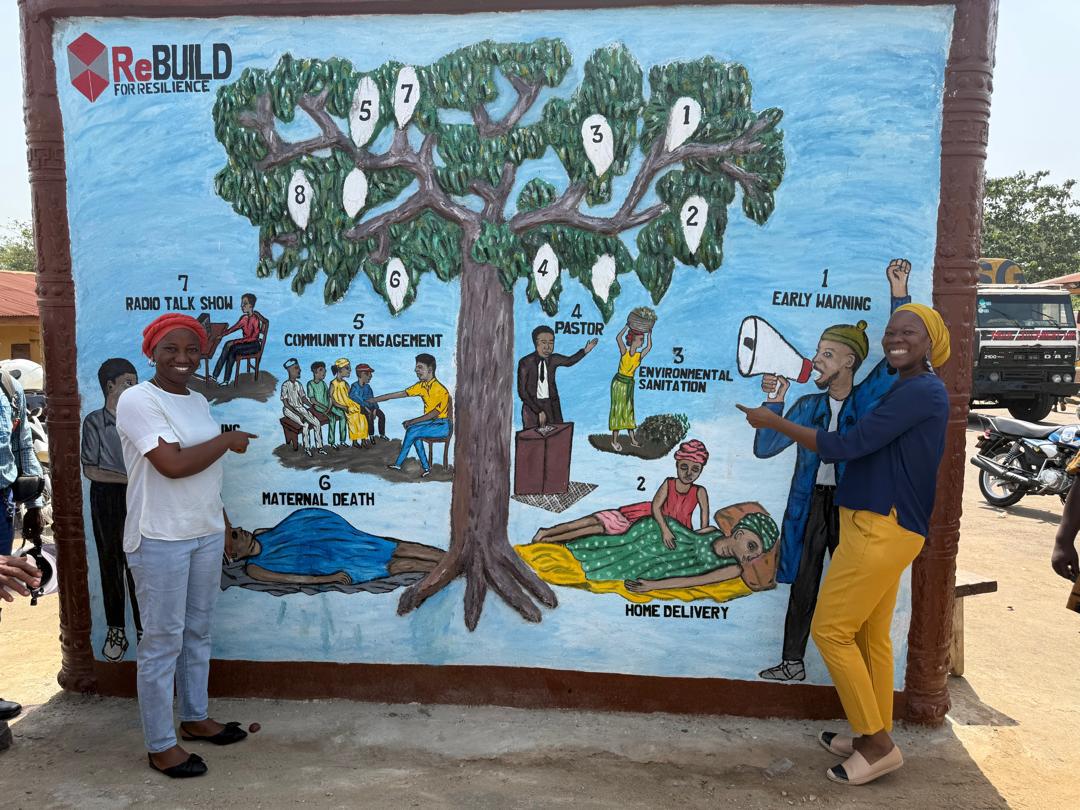
IfD staff at the story tree mural in Kailahun
Strengthening district-level health systems in Sierra Leone: Lessons from Kailahun and Moyamba and a practical toolkit
2 April 2026
Sierra Leone’s experience with health emergencies has reinforced a critical lesson: resilience is not built only through national policy or emergency response funding. It is built and sustained at district level through inclusive and sustainable action by local communities and structures.
Between 2020 and 2025, the ReBUILD for Resilience programme at Institute for Development worked with District Health Management Teams (DHMTs) and community stakeholders in Kailahun and Moyamba districts in Sierra Leone to strengthen district-level coordination, dialogue, and accountability both throughout routine processes and for crisis response (more on the study here). The experience from these districts suggests that structured, inclusive engagement mechanisms can support trust, collaboration, and more responsive governance.
While outcomes are shaped by context and multiple contributing factors, evidence from the two learning districts indicates that district-level platforms linking health authorities, community leaders, civil society, and citizens can contribute to improved communication, collective problem-solving, and reported improvements in health-seeking behaviour
To support adaptation and replication of these approaches, these lessons have been translated into the ReBUILD for Resilience Community Engagement Toolkit, a practical guide for district actors and partners seeking to strengthen health system resilience through inclusive governance.
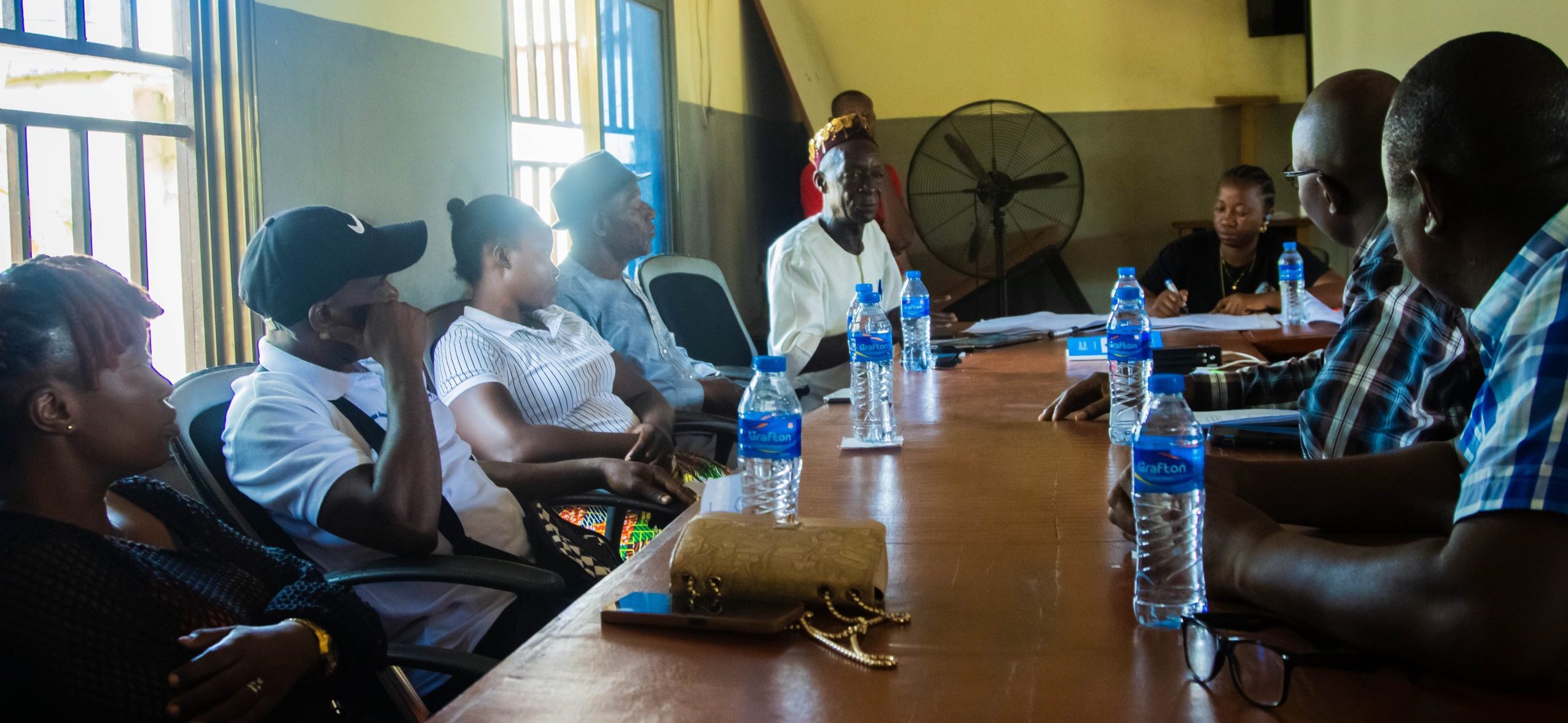
A stakeholder meeting in Kailahun
The district as the operational locus of resilience
Sierra Leone’s decentralised health system places District Health Management Teams at the centre of routine service delivery and emergency response. It is at district level that national policy becomes operational reality, that referrals are coordinated, that supply challenges are managed, and that public confidence in the health system is shaped.
However, effective district governance depends on more than administrative authority. Resilience is strengthened when district leadership is exercised in partnership with communities and local leaders. Communities are not simply recipients of decisions taken elsewhere, nor implementers of actions they did not help to shape. Sustainable progress depends on mechanisms that allow local actors to participate meaningfully in defining priorities, raising concerns, and contributing to solutions.
Accordingly, resilience depends not only on infrastructure and commodities, but on governance arrangements that promote structured dialogue, inclusive participation, and collaborative problem-solving across sectors. Experiences from Kailahun and Moyamba reinforce the importance of understanding district resilience as rooted in shared responsibility between health authorities and communities.
Lessons from Kailahun and Moyamba
1. Structured multi-stakeholder platforms
In both districts, monthly stakeholder meetings were convened under the leadership of DHMTs, bringing together health officials, traditional and religious leaders, women’s and youth representatives, local council actors, and civil society organisations. Evaluations by the ReBUILD for Resilience programme indicate high perceived effectiveness in collaborative decision-making and communication with communities. Participants reported clearer roles, improved coordination, and increased ownership of local health priorities. Importantly, these platforms operated within district systems rather than in parallel to them and were a relatively low-cost investment. While challenges such as resource constraints and service delivery gaps persist, the establishment of regular, structured dialogue was widely viewed as strengthening local governance processes.
2. Community dialogue and feedback mechanisms
Radio discussions were used in both districts to connect stakeholder deliberations with the wider community. Community-based survey data from programme evaluations indicate substantial exposure and high perceived usefulness of the health-talk programming. Respondents reported that radio discussions improved understanding of key health issues and contributed to positive health-seeking behaviours at community levels. Crucially, the radio format allowed for two-way communication, with community members raising concerns and district authorities responding publicly. This helped establish feedback loops and reinforce transparency.
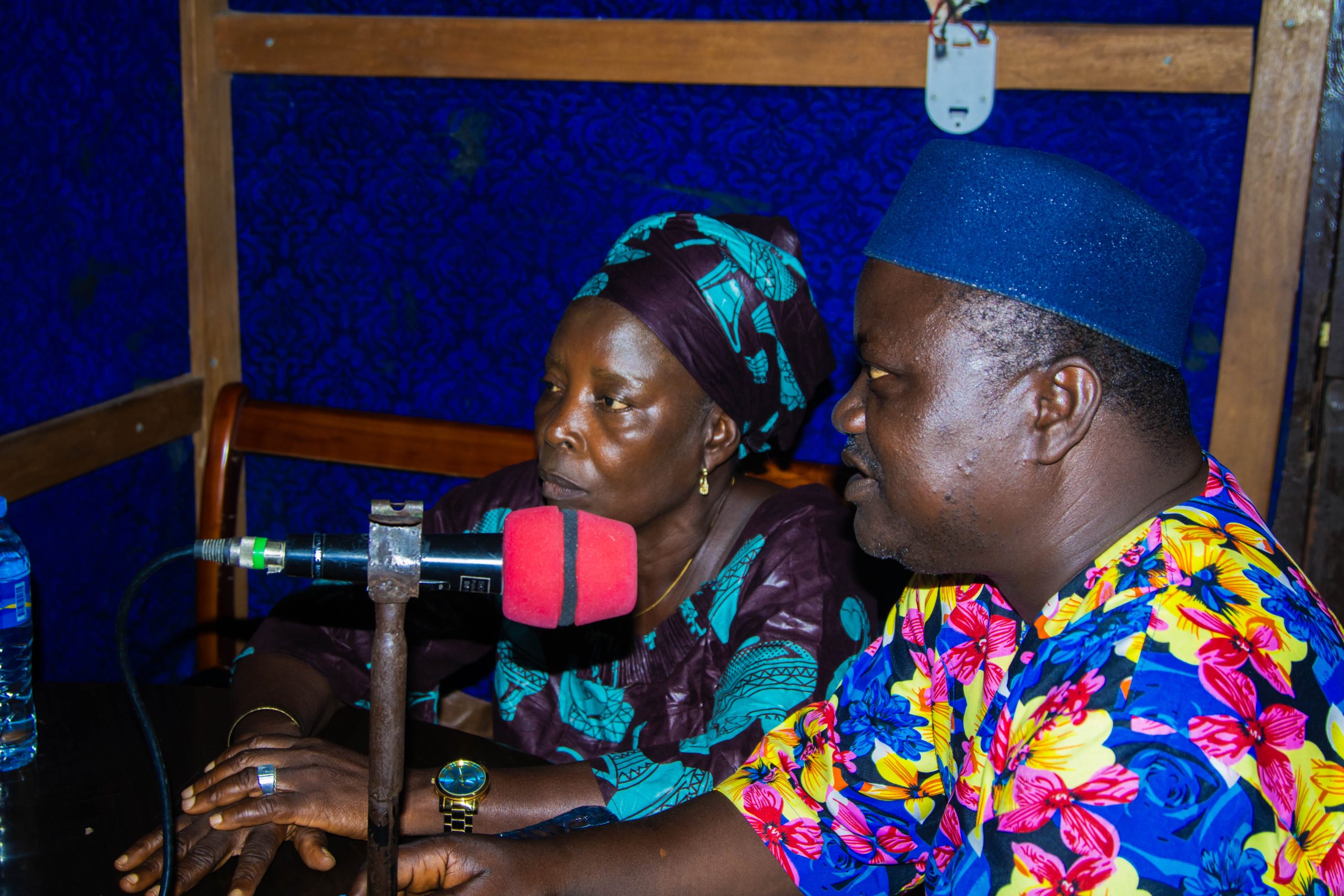
Radio discussions in both districts connected stakeholders with the wider community
3. Local accountability and inclusion
Contribution analysis undertaken for the final ReBUILD for Resilience evaluation in the two districts suggests that structured engagement processes were plausibly linked to improvements in coordination, responsiveness, and collective action, while recognising the influence of contextual and external factors. In both districts, efforts were made to ensure inclusion of women, youth, and marginalised groups within stakeholder platforms. Stakeholder evaluations report strong perceptions of inclusivity and increased ownership among participants. This inclusive representation contributed to legitimacy and to community acceptance of agreed actions, including sanitation initiatives and maternal health awareness.
These findings do not imply that all systemic constraints have been resolved. Persistent issues such as drug stock-outs, infrastructure gaps, and workforce shortages continue to affect service delivery. However, structured district-level dialogue appears to have strengthened the mechanisms through which such challenges are identified and addressed, including by local stakeholders brokering access to additional resources.
Implications for policy and practice
The experiences from Kailahun and Moyamba do not constitute a one-size-fits-all model. Rather, they illustrate how district-level governance processes can be strengthened through relatively low-cost, structured mechanisms that promote coordination and accountability.
Key implications include:
- District-level stakeholder platforms can complement existing DHMT structures and support routine governance
- Feedback mechanisms, including radio and community forums, can enhance transparency and responsiveness
- Inclusion of diverse community actors strengthens legitimacy and shared ownership
- Institutionalisation within district planning cycles increases the likelihood of sustainability beyond project support
For policymakers and development partners, the central message is that resilience is operationalised through routine district practices. Supporting these practices may be as important as investing in emergency response capacity.
Supporting district action: The community engagement toolkit
To translate district learning into practical guidance, the ReBUILD for Resilience Community Engagement Toolkit provides a structured but adaptable framework for district actors.
The toolkit offers:
- Guidance on stakeholder mapping and coalition building
- Practical steps for setting and implementing local action agendas
- Templates for budgeting and documentation
- Integration of radio or alternative communication platforms
- Readiness assessment and troubleshooting guidance
- Flexible implementation tracks for different district capacities
It is designed primarily for District Health Management Teams, in collaboration with local councils, traditional authorities, civil society, and development partners. The toolkit is not prescriptive; it is intended to support districts in adapting engagement mechanisms to their own context and priorities.
Conclusion
Building resilient health systems in Sierra Leone requires sustained attention to district-level governance, trust, and inclusion. Evidence from Kailahun and Moyamba suggests that structured, inclusive dialogue platforms combined with coordinated communication and local accountability mechanisms can contribute to strengthened district resilience. As Sierra Leone continues to advance decentralisation and preparedness efforts, supporting district-led engagement processes represents a practical and contextually grounded strategy. The Community Engagement Toolkit provides a resource to guide this work.
Resilience is not built only in times of crisis. It is built through routine, inclusive, and accountable district governance.
Further information
There’s more on this study – including papers, case studies and blog posts – here.