Aid cut responses and health system resilience in Sierra Leone
This brief dates from March 2026.
Sierra Leone’s health system is critically dependent on external funding, with Development Assistance for Health constituting a large proportion of total health expenditure between 2020 and 2024, while government contributions remain low. Aid cuts from major donors have led to a sharp decline in per capita health expenditure.
These reductions threaten critical programs including maternal and child health, immunization, and disease control (HIV, TB, malaria), with emerging service gaps particularly in rural, donor-dependent districts like Pujehun, Bonthe, Kambia, Karene, and Falaba. Without urgent action, supply shortages, compromised care quality, and increased inequities risk reversing post-Ebola health gains.
This brief draws on a mixed-methods study integrating health financing data (2019-25) and key informant interviews with 11 stakeholders from the Ministry of Health, donors, and civil society. It identifies immediate impacts, coping strategies, and long-term policy options to build resilience amidst funding volatility.
Key messages include:
• Early service disruptions are already emerging, with rural and donor-dependent districts likely to experience the most severe impacts.
• Short-term coping strategies are being used across the system, but some may only protect services temporarily while increasing inequity, reducing quality, and shifting costs to households.
• Without urgent action, aid cuts risk reversing post-Ebola health gains and widening existing access gaps.
• Sierra Leone needs both immediate mitigation and longer-term reform, including stronger domestic resource mobilisation, improved coordination, and sustainable health financing mechanisms.
Further information
There’s more on this study – Aid and health system resilience in fragile and shock-prone settings: reflections from ReBUILD for Resilience – here, including briefs on other contexts.
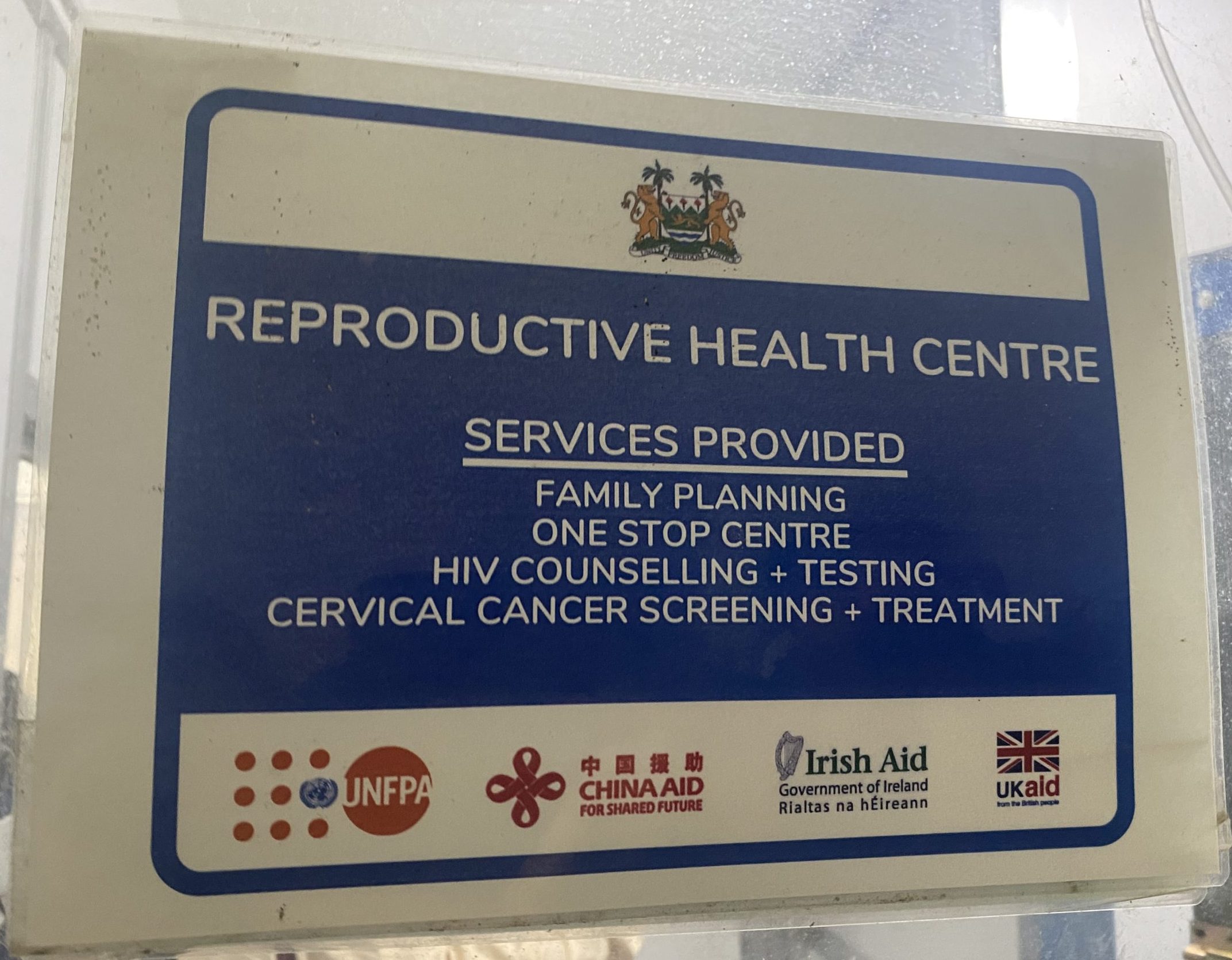
Image: Sign in King Harman Road Hospital, Freetown, Sierra Leone. International donors’ logos feature prominently.