Situation analysis of health services in the earthquake-affected areas of Mandalay and Sagaing, Myanmar
Partners: Burnet Institute, Myanmar, Liverpool School of Tropical Medicine UK and Queen Margaret University, UK
Background to the study
Two powerful earthquakes of 7.7 and 6.4 magnitude struck Myanmar on 28 March 2025. The earthquakes caused widespread destruction of critical infrastructure, including health facilities, clean water and electricity supply systems, road networks and bridges. The impact on health has been devastating. One month after the earthquake, the State Administration Council reported more than 3,800 deaths, 5,100 injuries, and 210 missing people. About 2,070,000 people were still displaced and 304 hospitals and clinics were damaged or destroyed.
Following the short-term emergency response, water and food-borne disease, and outbreaks such as dengue, malaria, plague and leptospirosis are expected. Displacement and low immunization coverage may contribute to increases in vaccine-preventable diseases as well as acute respiratory disease and tuberculosis, heat stroke and animal bites. In addition, limited access to regular medication for illnesses like diabetes and high blood pressure could trigger increased incidences of non-communicable diseases. Mental health and psychosocial support will also become a major priority after this huge natural disaster.
A number of rapid needs assessments have been conducted by different national and international partners and organizations. However, the WHO Public Health Situation Analysis (PHSA) Health Cluster Report highlighted ongoing gaps in understanding the health status and threats among affected populations, such as accurate numbers of death and injury, the burden of trauma and disabilities, trend of diseases, priority needs and nutritional status in the affected communities. In addition, a snapshot of the functionality of health facilities, accessibility and availability of health services is also required to evaluate at a different health facility level. WHO recommended conducting primary data collection for community-based surveys to understand access to primary health care and needs, essential livelihood requirements such as clean water, sanitation and hygiene (WASH), nutrition and food security. WHO also recommended mapping health service availability and readiness, as well as developing the early warning alert and response system for potential disease outbreaks.
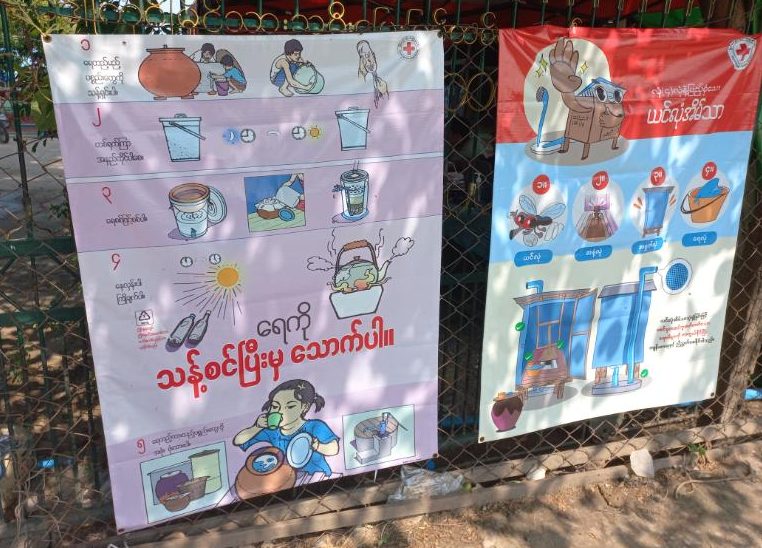
Instructions on how to safely use emergency water supplies (left), and fly-proof toilets (right) in a camp for people displaced by the earthquakes. Image courtesy Zenith Quality Team
About this study
This study is a cross-sectional descriptive study using a mixed-methods approach complemented by field observations and a desk review of secondary data. This study also aims to contribute to an effective post-recovery response to future disease outbreaks and control in a gender equitable health system involving non-state actors. Study sites will be selected based on the priority need of response to earthquake intensity (above 7.5 and 8) and severity of impact and accessibility to townships (16 from Mandalay and 1 from Sagaing will be included in the study). This study will focus on camp settings in the community which are overcrowded, with insufficient infrastructure for WASH and shelter, leading to the high potential for the unusual disease outbreaks.
Research objectives
- To investigate common health problems and access to healthcare services of affected communities
- To determine the urgent healthcare needs of affected communities, including nutrition, water, sanitation and hygiene
- To assess the capacity of healthcare services by health facilities and preparedness for post-earthquake public health threats in the affected areas
- To enhance an Early Warning Alert and Response System (EWARS) for potential disease outbreaks
Outputs
Top image: A temporary shelter for more than one family in an earthquake-struck area of Myanmar. Image courtesy Zenith Quality Team