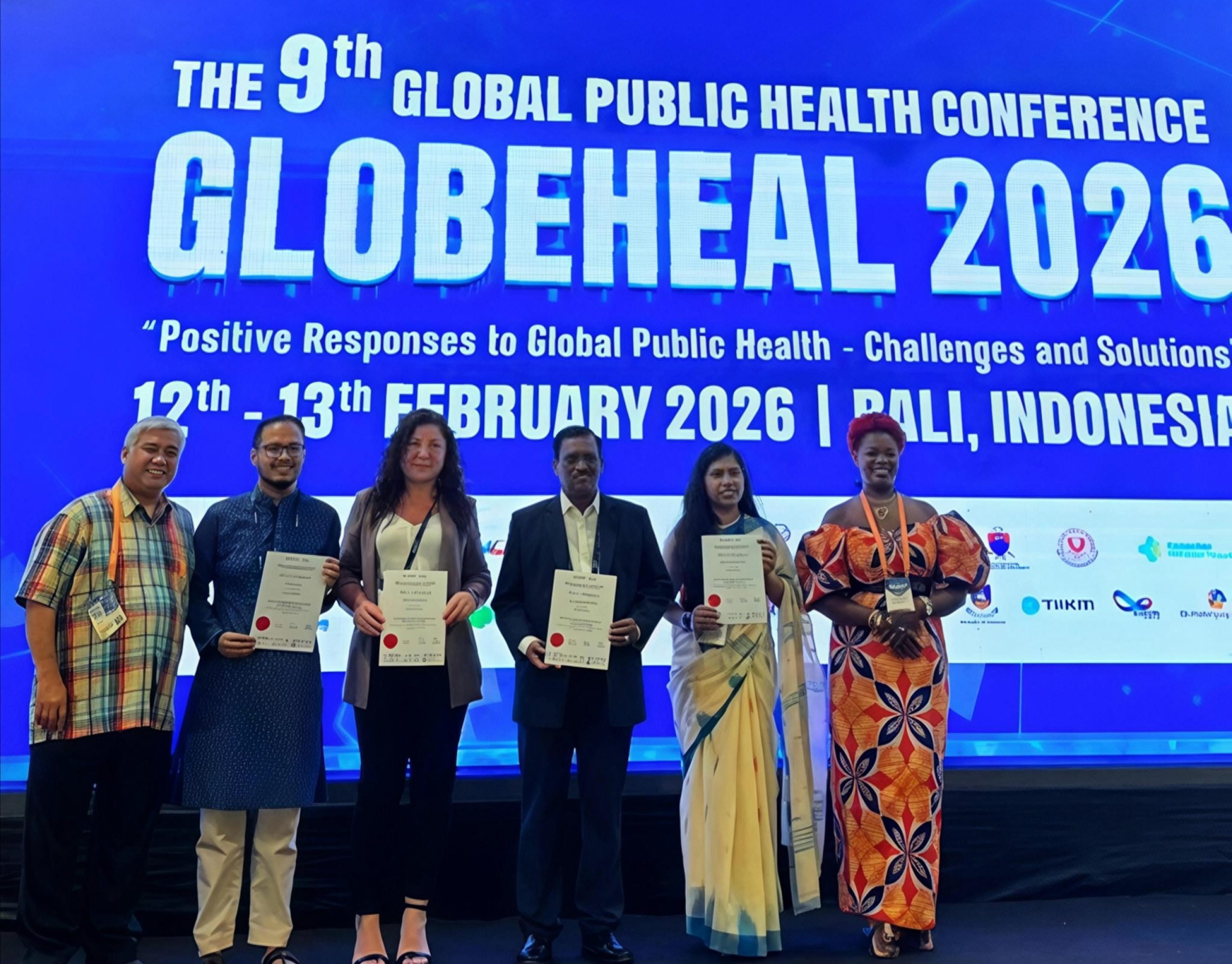
Receiving our participation certificates at GLOBEHEAL 2026, marking our first experience sharing climate and health research on an international platform.
From the Delta to the Island: Climate Change, Public Health, and Our First Global Stage
3 April 2026
In this article, Ashik Barua and Suchona Rani Kairi, both early career researchers at BRAC James P Grant School of Public Health, BRAC University in Bangladesh, talk about their experience presenting their Urban Echoes study at conference in Bali.
From Dhaka to Denpasar: Carrying the Delta With Us
When we arrived in Denpasar, Indonesia for the 9th Global Public Health Conference 2026, we carried more than research findings. We carried the delta with us. Our work at the BRAC James P Grant School of Public Health in Dhaka and Khulna unfolds in a landscape where climate change is not a distant projection but a lived and layered reality. Rising temperatures, flooding, salinity intrusion, food insecurity, and displacement shape the health of the communities we work with every day.
This was our first international conference. As early career researchers, we arrived with both excitement and a quiet sense of responsibility. We were presenting under a track focused on climate change and public health, where discussions ranged from climate-resilient health systems and air pollution to extreme weather preparedness, food security, and vector-borne diseases. As we listened to researchers from different regions, we began to understand that the experiences of Bangladesh’s climate-affected communities were not peripheral to global debates. They were central to understanding how climate change restructures health inequities worldwide.
Moving from Dhaka and Khulna’s dense urban settlements to Bali’s conference halls created a physical shift. More importantly, it created an intellectual shift. We were no longer only generating data within our context. We were entering a global conversation about whose knowledge shapes climate and health policy.
Rethinking resilience and vulnerability
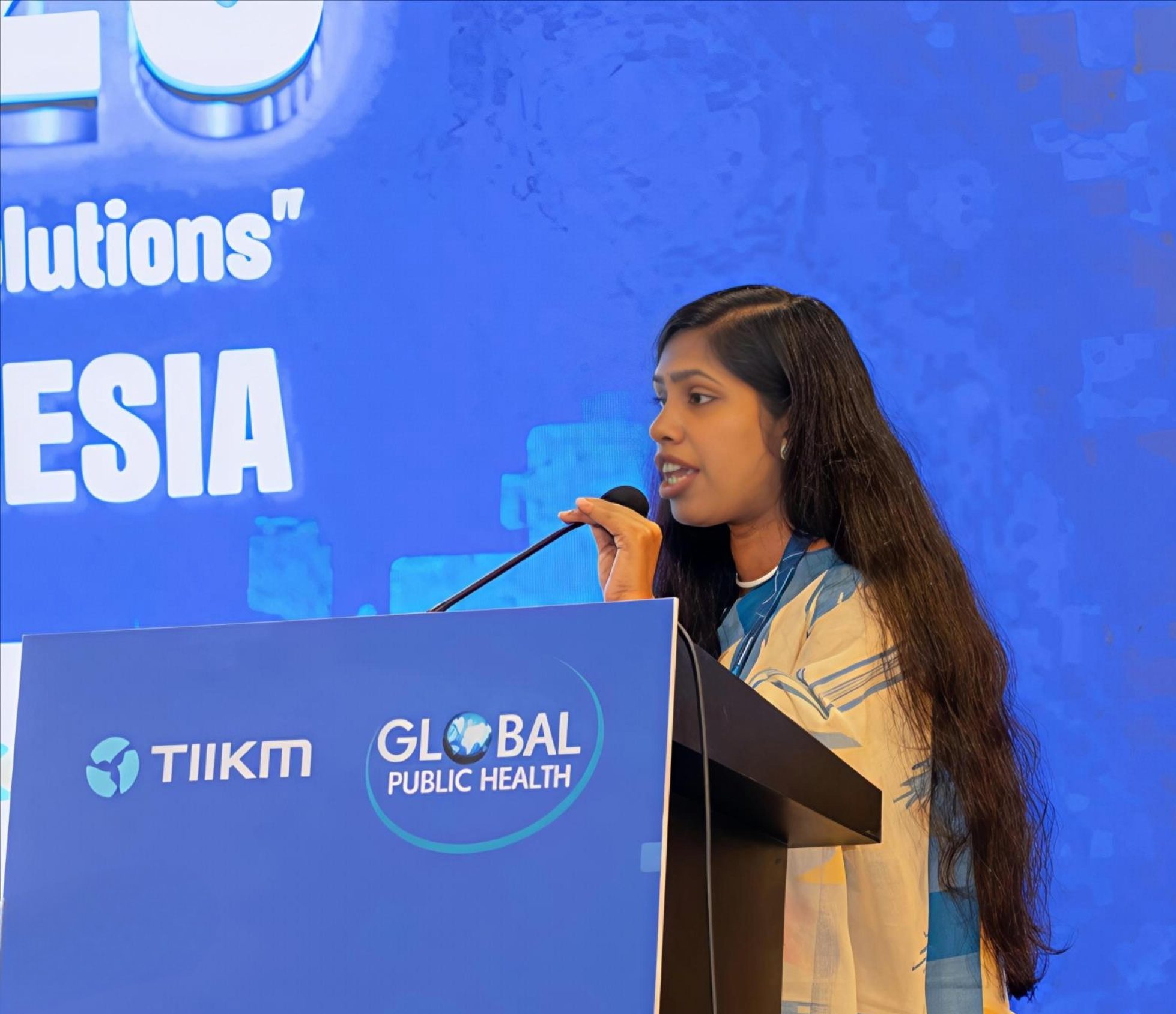
Presenting our findings on privatized resilience, which examined how urban informal settlement residents in Dhaka absorb the health costs of climate shocks through personal coping strategies.
In our first presentation, we examined climate-induced vulnerability in urban informal settlements through a quantitative lens. We focused on how households respond to flooding, heat stress, and recurring environmental shocks. What we found challenged the celebratory language often used in global health discourse.
Resilience in informal settlements is frequently individualized. Families cope by exhausting savings, borrowing from informal lenders, reducing food consumption, delaying healthcare, and absorbing environmental shocks within the household. These responses are often interpreted as adaptive capacity. Yet our findings led us to ask a different question: when survival depends on personal sacrifice rather than systemic protection, can we still call it resilience? We came to describe this phenomenon as privatized resilience. Climate shocks are not absorbed by robust public systems. Instead, they are transferred downward to those least equipped to bear them. This framing forced us to rethink of resilience as a governance issue rather than a purely community attribute.
In our second presentation, we extended this analysis by exploring climate migration through a mixed-methods secondary analysis of climate-affected communities and migrants. Migration, we argued, is not a simple movement from a vulnerable place to a safer one. It is an accumulation of intersecting vulnerabilities. Families displaced by salinity intrusion or environmental degradation move into urban spaces where overcrowding, inadequate infrastructure, precarious employment, and limited access to healthcare create new layers of risk. Vulnerability travels. It compounds. It intersects.
Together, our two presentations formed a connected argument. Climate change does not create health inequity from scratch. It magnifies structural weaknesses in urban systems and exposes gaps in governance. Whether through household-level coping strategies or climate-driven mobility, the burden of adaptation is unevenly distributed.
Standing on our first international stage, we realized that we were not only presenting findings. We were challenging dominant narratives that romanticize resilience while overlooking structural neglect.
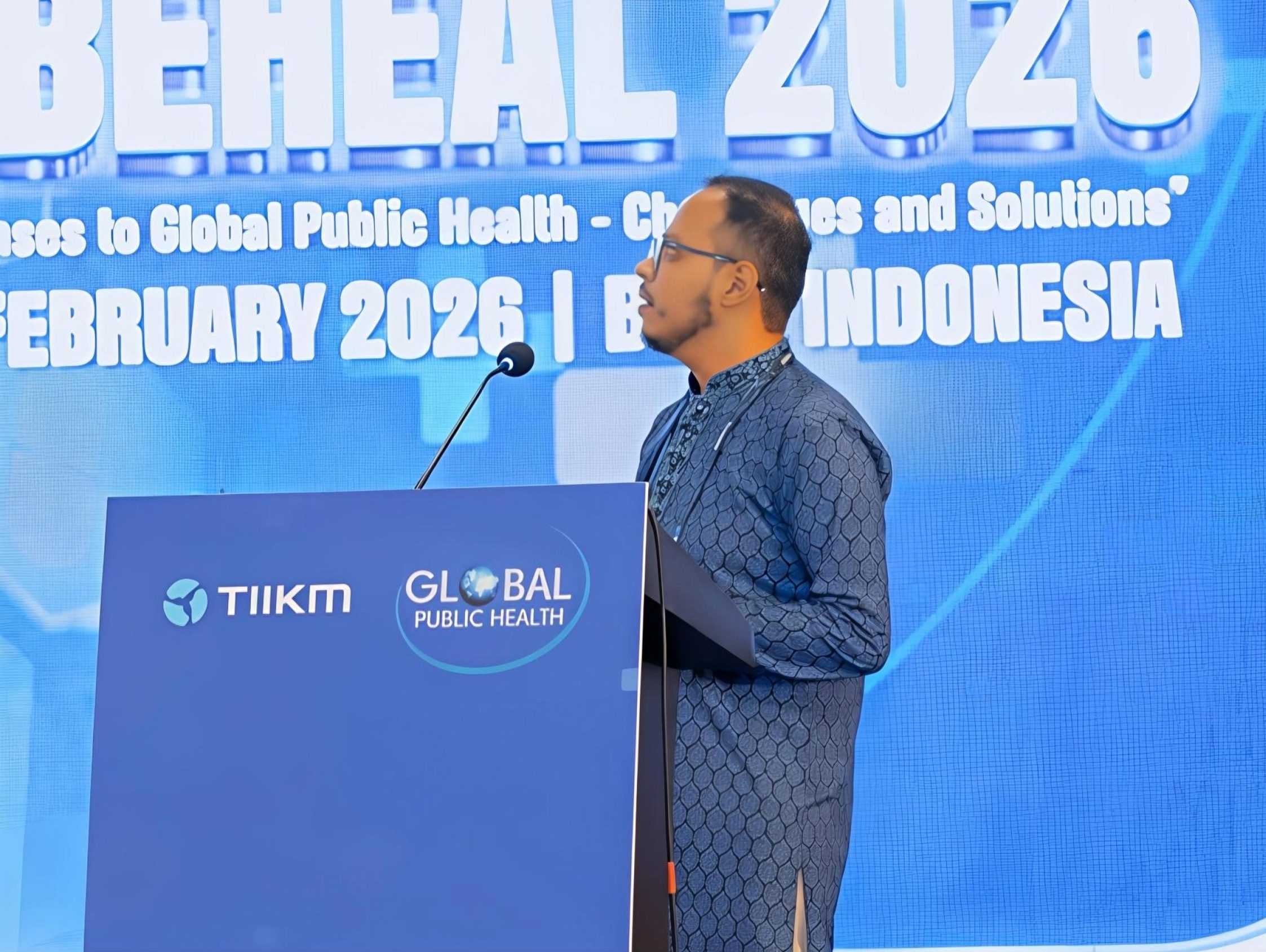
Sharing insights on intersecting vulnerabilities faced by climate migrants, and how health risks intensify through layered precarity in urban relocation settings.
Climate change and public health: Expanding the frame
The broader conference sessions helped us situate our work within a wider climate-health ecosystem. A presentation from Tamil Nadu explored how regenerative agricultural practices using biochar could enhance soil health, improve food security, and strengthen climate resilience. This work demonstrated how climate adaptation in agriculture directly influences nutritional outcomes and long-term public health stability. It reminded us that food systems are inseparable from health systems.
Another study examined the impact of climate change on adolescent girls’ participation in sports, highlighting how rising temperatures and environmental instability create gendered barriers to mobility and physical activity. This perspective expanded our understanding of climate-health linkages. Heat stress is not only a clinical concern. It reshapes daily life, restricts participation, and influences long-term physical and mental well-being, particularly for young women.
Sessions on air pollution underscored how deteriorating environmental conditions exacerbate respiratory illnesses. Discussions on extreme weather preparedness revealed the strain climate disasters place on fragile healthcare infrastructure. Presentations on vector-borne diseases illustrated how shifting ecological conditions alter patterns of transmission, requiring adaptive surveillance and response systems.
As we engaged with these discussions, we saw how our own research fit into a larger pattern. Climate change operates as a multiplier of inequity. It intensifies respiratory conditions, disrupts food access, alters disease ecologies, and increases stress on health systems. Yet the distribution of these burdens is not random. It follows existing lines of poverty, gender, mobility, and marginalization.
While some studies focused on technological adaptation or disease-specific responses, our work foregrounded structural responsibility. We questioned how health systems can claim climate resilience if they rely on household-level coping. We argued that climate-resilient health infrastructure must incorporate migration-aware urban planning, equitable resource allocation, and strengthened social protection mechanisms.
This comparative reflection expanded our understanding. Climate change and public health cannot be addressed through isolated interventions. They demand integrated, justice-oriented frameworks that acknowledge how environmental shocks intersect with social inequality.
Becoming accountable knowledge producers
Participating in this conference transformed how we see our roles as researchers. Much of our daily work involves data cleaning, statistical analysis, and report writing. In Bali, we stepped into a space where we had to defend our conceptual framing, articulate the political implications of our findings, and respond to critical questions from a global audience.
We felt the weight of representation. As researchers from Bangladesh, a country frequently positioned as a site of vulnerability in global climate narratives, we recognized the importance of speaking from within rather than being spoken for. Our presence challenged the idea that expertise flows primarily from North to South. We were contributing contextually grounded knowledge shaped by lived climate realities.
This experience shifted our identity from data collectors to accountable knowledge producers. It pushed us to think more critically about whose voices shape climate discourse and how early career researchers from the Global South can influence that conversation.
Returning with participatory commitments
We returned to Dhaka with deeper questions about participation and leadership in climate-health research. How can we ensure that climate-affected communities are not merely research participants but co-creators of knowledge? How can studies on migration and urban vulnerability incorporate participant-led methodologies that center lived experience as expertise? What would climate-resilient health systems look like if they were designed through community consultation rather than top-down planning?
We believe that climate justice in public health requires more than evidence. It requires participatory governance, South-led frameworks, and institutional accountability. It requires shifting authority toward those living at the frontline of climate change. It requires research that does not only document suffering but supports collective problem solving.
From the delta to the island, our first global conference experience clarified something essential. Climate change is redefining public health, and the response must be equitable, participatory, and locally grounded. As early career researchers from Bangladesh, we see our role not only in producing data but in advocating for systems that protect rather than privatize survival.
The delta travels with us. So does the responsibility to ensure that resilience becomes a shared public commitment rather than an individual burden carried in silence.
Further information
There’s more on Urban Echoes: Intersections of health, gender, climate change and resilience in urban slums in Bangladesh here, including the work the BRAC team presented at this conference.