Co-developing principles and practices for health systems strengthening in fragile settings, for and with NGOs operating across the humanitarian-development spectrum
Background
While health system strengthening (HSS) is a common term in global health and is acknowledged as essential to sustainable improvements to health outcomes, it remains conceptually and practically problematic. It is difficult to define and even more difficult to measure. The proliferation of global health initiatives (GHIs) and direct country assistance in recent decades has increased the availability of funding and technical assistance to health systems. However, this has, on the whole, been delivered in a vertical, disease-focused way, further fragmenting and weakening health systems and encouraging donor dependency (see Witter et al (2023) [opens new tab]).
Fragile and conflict-affected settings (FCAS) present a further challenge for HSS. In these settings, responses that address immediate health needs while strengthening the health system in the long term are needed. These impact on recovery, development, and peace and state-building (see Witter et al (2015)). However, factors such as weak governance, the delivery of services by non-state actors and siloed and fragmented responses with narrow humanitarian approaches complicate the picture and possibly contribute to inefficient and inequitable health systems. While some have advocated a Humanitarian-Development-Peace Nexus (HDPNx) approach, the operationalisation of this approach with HSS in mind has been challenging.
Building on previous work (reported in the 2023 case study, Improving conceptualisation and evaluation of health system strengthening), ReBUILD has continued to provide evidence for policy and practice on the topic of HSS in FCAS. This has focused on going beyond the conceptualisation and evaluation of HSS to supporting non-governmental organisations (NGOs) working across the humanitarian and development spectrum to improve their practices and operations. Our most recent work has been undertaken in close collaboration with and support to the Action for Global Health (AfGH), a UK-wide network of NGOs, and Health System Global’s Thematic Working Group on Fragile and Conflict-Affected Settings (TWG FCAS) [opens new tab], which Maria Bertone (of Queen Margaret University (QMU)) vice-chairs.
Pathways to impact
As further described in the 2023 case study, the ReBUILD team has been engaged with work to conceptualise HSS and to discuss HSS principles and practices since 2016 with a range of key global actors [outputs in hyperlinks – all open new tabs], including the UK’s Foreign, Commonwealth and Development Office (FCDO), the Global Fund, the Health System Strengthening Evaluation Collaborative (HSSC – where all major funders of HSS were represented, e.g. FCDO, USAID, GFATM, GAVI, GFF, World Bank, the Gates Foundation, WHO/AHPSR, for a total of 28 organisations and 17 countries), Knowledge for Development (K4D), and Action for Global Health (AfGH – a UK-wide network of NGOs working on global health). Since 2022, our active engagement on the topic of HSS in FCAS has continued, building on those networks and evidence produced and aiming to address the gaps and arising needs for guidance from different key actors.
2023-24: Building on conceptual work on HSS and engagement with global health initiatives and funders through the HSSEC, ReBUILD researchers at QMU have co-led the research work for the Future of Global Health Initiatives, which then fed into the drafting and high-level endorsement of the Lusaka Agenda [opens new tab]. The impact of that strand of work is described in a 2024 ReBUILD case study on Improving the engagement of global health initiatives with country health systems, including in fragile and shock-prone settings.
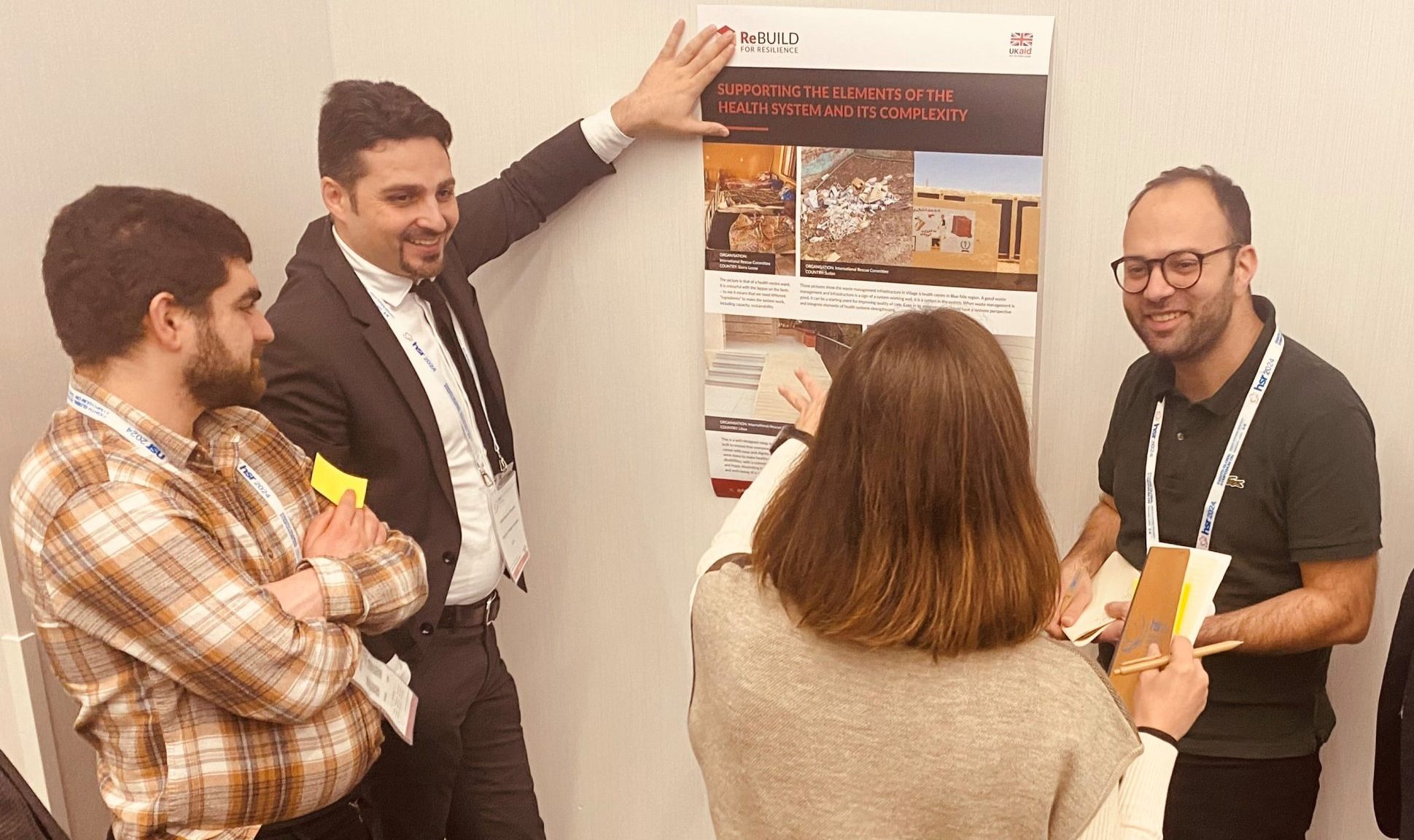
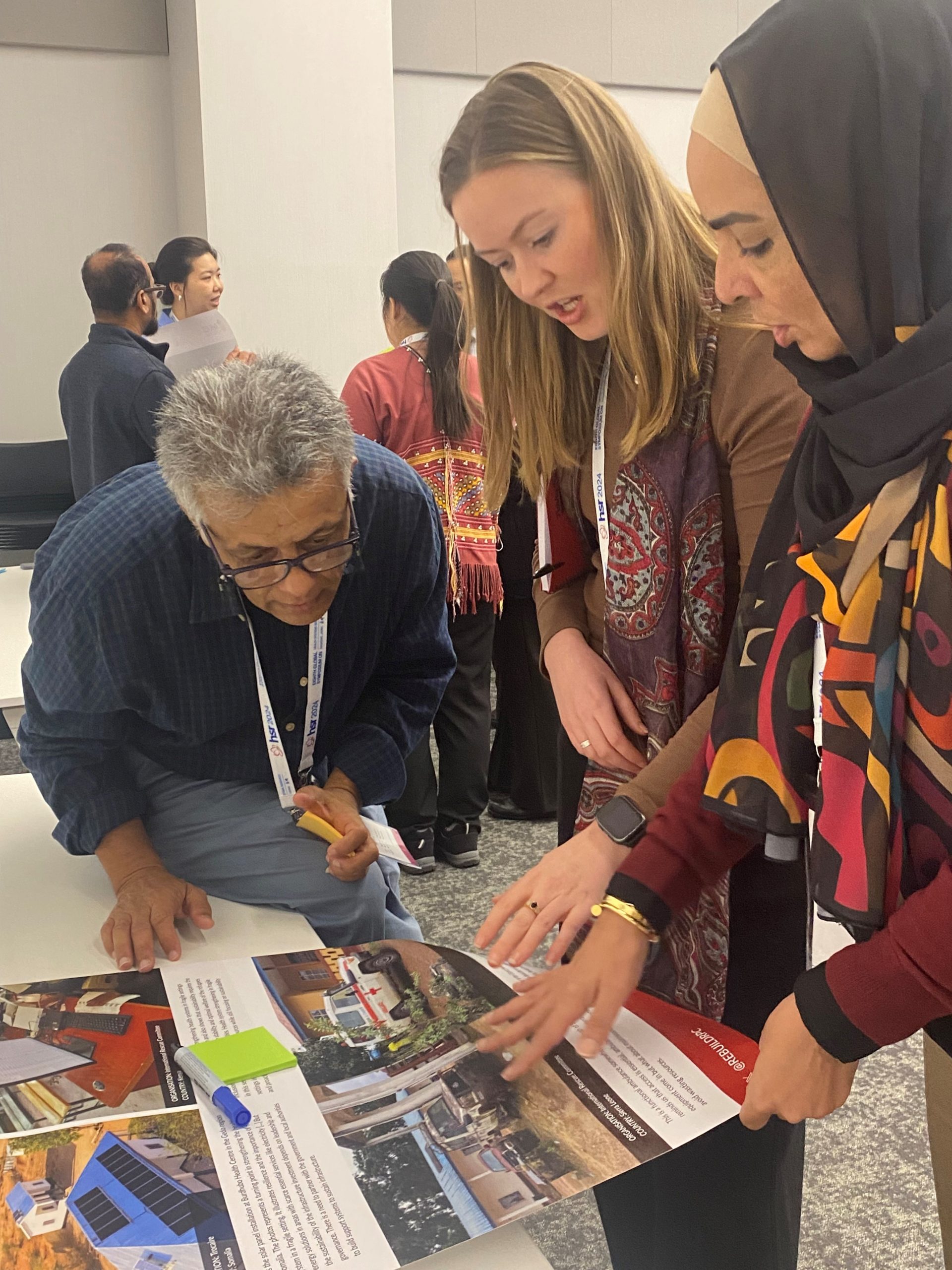 2024-25: Noticing that implementing agencies, NGOs and civil society organisations (CSOs) operating across the humanitarian and development spectrum were notably absent from the debates and discussions around HSS in fragile settings, over the last year ReBUILD has explicitly aimed to engage with those actors with more specific attention to their operational perspectives. In 2024, work was conducted with World Vision UK and the International Rescue Committee (IRC) to gather the experiential perspectives of the front-line actors engaged in “doing” HSS at different levels. This work expanded the messages of the 2022 AfGH brief which covered the “what to do” questions, by exploring the “how to do” questions in relation to HSS programming in FCAS. This provides practical recommendations based on the collective experiences of implementing and funding agencies. Research has included key informant interviews with practitioners in donor and implementing agencies at global and regional levels, but also innovative methods, e.g. engaging country-level practitioners with “photo-elicitation”. It has led to the development of a presentation, a poster and photo panels – presented at the Global Symposium on Health Systems Research in November 2024 and at the African Health Economics and Policy Conference in March 2025 – as well as a policy brief and a background paper (which will feed into AfGH’s work to support the development of FCDO’s global health strategy). Further dissemination events are planned, targeting FCDO’s health advisers and AfGH’s members, as well as more widely through the TWG FCAS and academic publications.
Impact
ReBUILD researchers have been able to closely engage with working groups such as the TWG FCAS and the AfGH, as well as individual NGOs and CSOs and their experts working on HSS programmes in FCAS across the humanitarian and development spectrum, not only to share evidence on the principles of HSS in FCAS, but also to co-develop operational guidance on the practices of HSS programming in fragile settings. Further dissemination work will focus on influencing humanitarian and development practices to ensure HSS is embedded in all health programming in FCAS, including during conflict and in the early recovery phases.
Further information
Images: Examining posters produced during the photo elicitation exercise. Taken at the Global Symposium on Health Systems Research, November 2024